

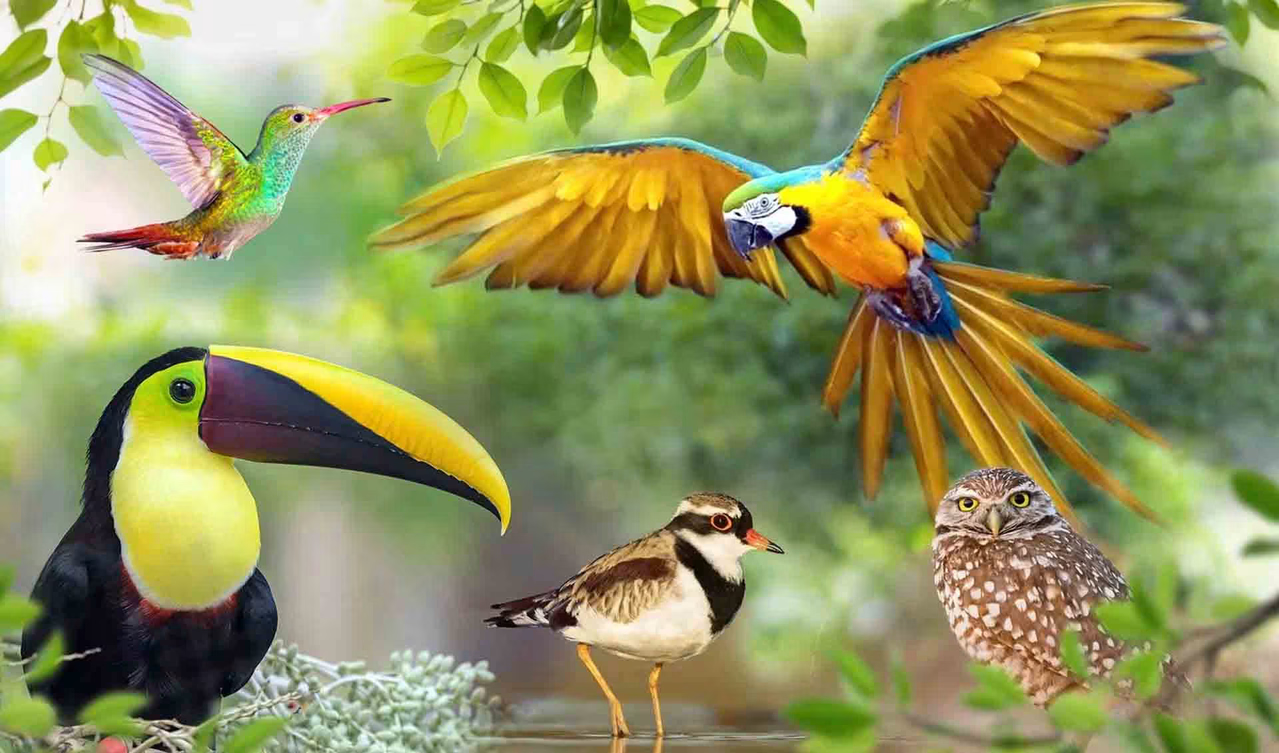
.avif&description=Discover fascinating birds name, their habitats, behavior, diets, unique features, and importance in nature through this engaging guide to the world of birds.)
Birds are among the most fascinating and recognizable animals on Earth. They can be found almost everywhere, from dense forests and open grasslands to wetlands, deserts, mountains, cities, and even remote islands. Their remarkable ability to fly, diverse body structures, colorful feathers, complex songs, and unusual behaviors have made them an important part of natural ecosystems and human culture for thousands of years. Some birds are tiny enough to fit comfortably in a person’s hand, while others have impressive wingspans and powerful bodies designed for long-distance travel.
Learning about birds name is more than simply memorizing different species. Each bird has evolved characteristics that help it survive within a particular environment. A waterbird may have specialized feet and a bill suited to catching aquatic prey, while a bird living in a dry region may have adaptations that help it conserve water and tolerate heat. Understanding these differences provides a better appreciation of how wildlife interacts with habitats and why protecting bird populations is important for healthy ecosystems.
The world of birds is also closely connected with everyday life. People often notice birds around gardens, parks, farms, rooftops, and balconies without realizing how much information their presence can provide about the surrounding environment. Observing birds can introduce children and adults to nature while encouraging curiosity about wildlife, seasons, migration, food chains, and conservation.
What Makes Birds Different From Other Animals?
Birds belong to a highly diverse group of animals known for feathers, beaks, wings, and lightweight skeletons. Although not every bird uses its wings for sustained flight, wings remain an important part of their anatomy. Feathers serve several purposes, including insulation, protection, communication, camouflage, and flight. The structure of a bird’s feathers allows many species to control their movement through the air with remarkable precision.
Another important feature is the bird’s respiratory system. Birds have an efficient breathing system that supports the high energy requirements associated with flying and active lifestyles. Their bodies are generally adapted for maintaining a stable internal temperature, allowing many species to remain active across changing environmental conditions. Different birds have also developed specialized bills, feet, and body shapes according to what they eat and where they live.
The enormous variety within birds name categories demonstrates how evolution can produce different physical characteristics from related biological foundations. A woodpecker’s strong bill is suited to working with tree bark, while a hummingbird has a specialized bill and tongue for feeding on nectar. Eagles and hawks possess powerful feet and hooked bills for handling prey, whereas ducks have bills adapted for feeding in aquatic environments.
Major Types of Birds Found Around the World
There are thousands of known bird species, and they occupy an extraordinary range of ecological niches. Instead of looking at birds only by appearance, scientists and bird enthusiasts often consider characteristics such as habitat, feeding behavior, body structure, movement, and evolutionary relationships.
Songbirds represent one of the most familiar groups. They include many species that are commonly seen around gardens, forests, farms, and urban areas. Their songs may serve different purposes, including attracting mates, defending territories, and communicating with other individuals. Some species produce surprisingly complex sounds and can learn or imitate sounds from their surroundings.
Birds of prey form another important group. Eagles, hawks, falcons, and owls have adaptations that help them locate and capture prey. Their sharp talons, strong bills, excellent vision, or sensitive hearing make them effective hunters. Owls, for example, are particularly suited to hunting in low-light conditions, while many daytime raptors rely heavily on their exceptional visual abilities.
Water-associated birds include ducks, geese, herons, kingfishers, pelicans, and many other species. Wetlands, rivers, lakes, coastlines, and marshes provide food and nesting opportunities for these birds. Their physical adaptations vary considerably, with some species built for swimming, some for wading, and others for diving or catching fish.
Popular Birds and Their Distinctive Characteristics
Different birds have developed unique combinations of physical and behavioral traits. A few familiar examples demonstrate just how varied the group can be.
| Bird | Typical Habitat | Common Food | Distinctive Feature |
|---|---|---|---|
| Eagle | Mountains, forests, open landscapes | Fish, mammals, birds | Powerful talons and excellent vision |
| Peacock | Forest edges, grasslands, cultivated areas | Seeds, insects, plants | Elaborate tail display |
| Parrot | Tropical forests and woodland | Fruits, seeds, nuts | Curved bill and strong intelligence |
| Owl | Forests, farmland, rocky areas | Rodents, insects, small animals | Excellent low-light hunting abilities |
| Penguin | Coastal and polar regions | Fish, krill, marine organisms | Flightless body adapted for swimming |
| Flamingo | Wetlands and shallow lakes | Algae, small aquatic organisms | Long legs and specialized feeding bill |
These examples show that birds do not follow one universal body design. Their characteristics reflect the environments in which they live. A penguin’s wings have become effective swimming structures rather than traditional flight wings, while a flamingo’s long legs allow it to move through shallow water while searching for food.
Peacocks are known for their spectacular displays, but their appearance is only one part of their natural history. Parrots are notable for their curved bills, climbing abilities, vocal communication, and problem-solving skills. Such differences make studying birds especially interesting because almost every habitat presents another example of adaptation.
How Birds Adapt to Different Habitats
Habitat plays a major role in determining how birds live. Forest birds may rely on trees for nesting, shelter, and food, while grassland species often depend on open spaces for hunting or feeding. Wetland birds may have long legs, specialized bills, webbed feet, or other adaptations that help them obtain food in or around water.
Birds living in cities have also demonstrated impressive adaptability. Species such as pigeons, sparrows, crows, mynas, and certain other urban birds can make use of buildings, parks, roadside vegetation, food waste, and artificial structures. Urban environments are not always ideal for wildlife, but adaptable species can sometimes exploit resources created by human activity.
Climate creates another layer of adaptation. Birds living in cold environments may have dense plumage and behavioral strategies that reduce heat loss. Species in hot environments may alter their activity patterns, seeking food during cooler periods of the day. These adaptations illustrate why habitat preservation is essential: when environments change too quickly, specialized species may struggle to adjust.
What Do Birds Eat?
Bird diets vary enormously depending on species, habitat, body structure, and seasonal availability. Some birds primarily consume seeds and grains, while others feed on fruits, nectar, insects, fish, small mammals, or other animals. Many species are opportunistic and change their diets when preferred food becomes scarce.
Birds also play important roles within food webs. Insect-eating species can help regulate insect populations, while fruit-eating birds may consume and later disperse seeds. Nectar-feeding birds can contribute to pollination, and scavenging birds help remove organic material from ecosystems. Their feeding habits therefore connect them to many other organisms.
Young birds may have different nutritional requirements from adults. In numerous species, parents provide food to chicks until they become capable of feeding independently. The process can involve repeated journeys between feeding areas and nests, demonstrating the considerable energy investment required for successful reproduction.
How Birds Communicate
Communication is one of the most fascinating aspects of bird behavior. Birds use songs, calls, movements, body postures, colors, and visual displays to interact with one another. A simple call can warn others about danger, while a complex song may help establish territory or attract a mate.
Some birds are remarkably skilled at learning sounds. Certain species can imitate environmental noises and even sounds produced by other animals. Vocal learning is particularly interesting because it demonstrates that bird communication can involve experience rather than being entirely instinctive.
Visual communication is equally important. Feather colors, crests, tail movements, and body postures can send signals to other birds. In some species, males and females look significantly different, while in others both sexes have similar appearances. These differences often relate to mating behavior, camouflage, territorial competition, or other survival pressures.
Migration and Seasonal Movement
Migration is one of the most impressive behaviors found among birds. Some species travel enormous distances between breeding and non-breeding areas, sometimes crossing mountains, oceans, deserts, and multiple countries. These journeys are usually connected to seasonal changes in food availability, temperature, daylight, and breeding conditions.
Migration requires remarkable physical preparation. Birds may increase their food intake before long journeys to build energy reserves. They also need to navigate successfully and identify suitable resting and feeding locations along the way. Different species use different strategies, and some migrate individually while others travel in groups.
Not every bird migrates long distances. Some remain within the same general region throughout the year, while others make shorter seasonal movements. Understanding these patterns helps researchers identify important habitats that need protection during different parts of the year.
Why Birds Are Important to Ecosystems
Birds perform many ecological functions that support healthy natural environments. Their role as predators, prey, pollinators, seed dispersers, scavengers, and consumers of insects connects them with numerous parts of an ecosystem. Removing a significant number of birds from an environment can therefore affect other organisms and ecological processes.
Seed dispersal is particularly important in forests and other plant-rich environments. Birds may consume fruits and carry seeds to different locations, where some eventually germinate. This natural movement can contribute to plant regeneration and the distribution of vegetation.
Birds can also provide useful signals about environmental changes. Changes in population size, migration timing, breeding success, or distribution may indicate shifts in habitat quality, food availability, climate, or other environmental conditions. For this reason, scientists frequently monitor bird populations when studying ecological change.
Simple Ways to Observe and Appreciate Birds
Birdwatching does not require expensive equipment or extensive scientific knowledge. A person can begin by observing birds from a balcony, garden, local park, or other suitable outdoor area. Paying attention to size, shape, color patterns, behavior, calls, and habitat can gradually improve identification skills.
A few useful habits can make bird observation more rewarding:
- Observe quietly and avoid disturbing nests or feeding areas.
- Notice habitat, movement, size, bill shape, and distinctive markings.
- Keep a simple record of unusual or frequently observed species.
- Provide safe natural spaces with suitable plants and clean water where appropriate.
Responsible observation is important because wildlife should not be disturbed merely for a closer view or photograph. Nesting birds can be particularly sensitive to repeated human activity. Giving animals sufficient space allows people to enjoy nature without interfering with normal behavior.
Threats Facing Bird Populations
Birds face a variety of environmental pressures. Habitat destruction, pollution, climate-related changes, invasive species, collisions with structures, and reductions in food availability can all affect different populations. The severity of each threat varies by species and region, but habitat loss remains an important concern because birds often depend on specific environments for nesting, feeding, and migration.
Human development can fragment natural habitats into smaller areas. A bird population may survive in isolated patches for some time, but fragmentation can make it harder to find food, mates, nesting sites, and safe migration routes. Changes in agricultural practices can also influence bird populations by altering vegetation and food availability.
Conservation does not always require creating completely untouched landscapes. Protecting wetlands, maintaining native vegetation, preserving forests, improving urban green spaces, and reducing harmful pollution can all contribute to healthier environments for birds. Even relatively small habitats can become valuable when they form part of a larger connected landscape.
How People Can Help Birds
Everyday choices can contribute to better conditions for local wildlife. Planting native vegetation, keeping outdoor areas free from harmful waste, protecting natural water sources, and avoiding unnecessary disturbance around nests are practical steps. In areas where feeding wild birds is common, people should also understand that inappropriate food can create health and behavioral problems.

The most useful approach is often to improve habitat rather than simply provide food. Native plants can offer insects, seeds, nectar, shelter, and nesting opportunities while also supporting other wildlife. A diverse garden can become a miniature ecosystem where birds interact with insects, plants, soil organisms, and other animals.
Education also has a major role. When people understand birds name and the ecological relationships surrounding different species, they are more likely to notice environmental changes and support responsible conservation practices. Children who develop an interest in birds can also gain broader knowledge about biology, geography, ecology, and environmental responsibility.
Interesting Facts About Birds
Birds continue to surprise researchers because their abilities are often more sophisticated than people initially assume. Some species can remember locations, recognize individuals, solve problems, manipulate objects, or learn complex vocal patterns. Their intelligence varies across species, but many birds demonstrate impressive behavioral flexibility.
Birds also show extraordinary diversity in physical form. Some are specialized for high-speed flight, some for diving, some for running, and others for climbing. There are species adapted to tropical forests, high mountains, deserts, frozen landscapes, wetlands, oceans, and heavily developed urban environments.
Their feathers are equally remarkable. Beyond allowing many species to fly, feathers can regulate body temperature, provide camouflage, create visual displays, and help birds communicate. The combination of lightweight structure and strong functionality is one reason birds are such successful and widespread animals.
The Role of Birds in Human Culture
Birds have influenced art, literature, mythology, traditions, scientific research, and everyday language across many societies. Their ability to fly has often been associated with freedom, movement, exploration, and imagination. Their songs and colorful appearances have also inspired artists and nature enthusiasts for generations.
Birds are frequently used as symbols, but their real ecological importance is just as significant. Watching a bird move through its natural habitat can provide a direct connection with the environment. This connection can encourage people to care about forests, wetlands, grasslands, and other habitats that support wildlife.
Modern technology has also made bird observation easier. Cameras, recording devices, identification tools, and scientific monitoring systems allow researchers and enthusiasts to collect information about distribution and behavior. However, technology works best when combined with responsible observation and respect for wildlife.
Conclusion
Birds are far more than colorful creatures that fill the sky with songs. They are highly adapted animals that occupy nearly every major type of environment and perform essential roles within ecosystems. From seed dispersal and pollination to insect control and scavenging, their activities influence plants, animals, and ecological processes in countless ways. Exploring birds name provides an opportunity to understand biodiversity from a practical and engaging perspective. Every species represents a unique combination of physical characteristics, feeding habits, communication methods, habitat preferences, and survival strategies. Learning these differences can make ordinary outdoor experiences much more interesting because a familiar garden or park becomes a place full of ecological stories.