

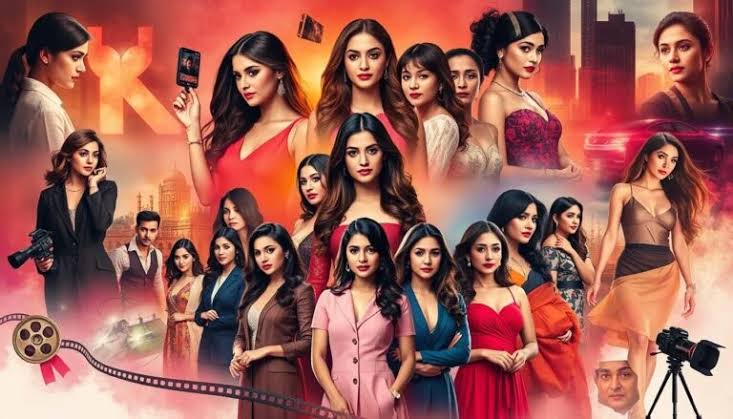

A few years ago, few people outside small-town India had heard of Ullu. Then, almost overnight, it was one of the most searched streaming names in the country. Its short, bold, drama-heavy shows drew a huge audience, especially in Tier 2 and Tier 3 cities where cheap mobile data had just turned smartphones into personal cinemas. Along with the shows, viewers became curious about the people on screen. Searches for the ullu webseries cast grew steadily, as fans wanted to know who these new faces were, where they came from, and what else they had done.
Ullu’s cast was never a star-studded lineup in the Bollywood sense. Most of its actors came from modelling, regional cinema, small television roles or music videos. Many were complete newcomers looking for their first real break. Over time, a handful of them built loyal followings that rivalled mainstream TV actors on social media. Their rise says a lot about how India’s digital entertainment industry changed, and about the risks that came with that change.
This article covers the people behind the platform: how Ullu found and used its talent, the faces viewers remember most, the kind of roles they played, and how the government’s 2025 action against the app changed things for the ullu webseries cast. Whether you are a curious viewer, an entertainment researcher or someone following the OTT industry, this guide gives you an up-to-date picture.
What Is Ullu and Why Its Cast Gets So Much Attention
Ullu is an Indian over-the-top streaming platform that launched in the late 2010s and grew quickly by focusing on short, adult-oriented web series. Instead of competing with big platforms on large budgets and famous stars, it went for volume, speed and bold storytelling. A typical Ullu original was split into short parts, released in quick succession, and promoted heavily through trailers on social media and video platforms. That strategy kept viewers coming back for new episodes, and it also meant a huge number of actors moved through its productions in a short time.
The cast drew attention partly because of the nature of the content and partly because of the faces themselves. For a lot of viewers, Ullu was where they first saw actors who later became well known on Instagram, in regional films or on other OTT apps. When a show trended, people searched for the lead actress’s name, her other work and her social media handles. That steady curiosity is a big part of why the topic still draws so many searches, even after the platform’s legal troubles.
How Ullu Built Its Talent Pool
Understanding the ullu webseries cast means understanding how the platform made content. Ullu didn’t run like a traditional film studio with long pre-production and big-name casting. It worked more like a fast content factory, with many small production houses delivering finished episodes on tight budgets and tight deadlines. That model had a direct effect on who got cast and how often they worked.
The Anthology Model and Constant Fresh Faces
Several of Ullu’s best-known franchises, such as Charmsukh, Palang Tod and Riti Riwaj, were anthologies: each story stood alone with its own characters, settings and cast. An anthology needs a steady supply of performers, because every new story needs new leads. For producers this was efficient, since they could make dozens of episodes without long-term contracts. For actors it meant opportunity, but also instability. One actress might lead three stories in a single year and then disappear from the platform completely, while another would become a fan favourite and keep getting called back.
That revolving door is why so many names are linked to the platform. Unlike a long-running TV serial where one core cast stays for years, Ullu’s library was made up of hundreds of short stories, each with its own small team. For viewers this created a sense of discovery. For the industry it created a talent pipeline that other small OTT apps soon copied.
From Regional Cinema and Modelling to OTT
Many performers came to Ullu with some experience from Bengali, Marathi, Bhojpuri or South Indian film industries, or from print and fashion modelling. For them, Ullu offered paid work, wider reach across Hindi-speaking audiences and a chance to build a personal brand online. Some saw it as a stepping stone and later moved on to other platforms, music videos or regional films. Others stayed within the adult web-series space because that’s where their audience was.
The same pattern shows up again and again: an actor gets noticed in one popular episode, their social media following grows quickly, and that following becomes a career asset of its own. For a lot of these performers, Instagram followers and YouTube interviews became as important as the shows themselves.
Popular Faces Who Defined the Platform
There’s no official ranking of Ullu’s actors, and popularity changed with every new release. Still, some names come up again and again in fan discussions, entertainment coverage and search trends. The profiles below are based on what is widely reported about their work. They are meant to show the kinds of careers the platform produced, not to be a complete list.
Kavita Radheshyam
Kavita Radheshyam is one of the most recognisable names linked to Ullu, mostly because of the series Kavita Bhabhi, which used her name as its title. The show became a long-running franchise and made her one of the platform’s signature faces. Her case shows how Ullu sometimes built a show around one actor’s personality and screen presence instead of a big ensemble, a strategy that tied the actor’s brand closely to the platform’s own.
Jinnie Jaaz
Jinnie Jaaz became popular with Ullu audiences mainly through the Jaane Anjane Mein franchise, which ran across several seasons. Her steady appearances in that series made her a familiar face for regular viewers, and entertainment coverage often lists her among the platform’s best-known actresses. Her career is a good example of how returning in a franchise built loyalty in a space where most actors appeared only once.
Manvi Chugh
Manvi Chugh appeared in episodes of Charmsukh and other originals, and she built a strong following on social media. She is often mentioned in conversations about actors who used the platform’s reach to grow a wider personal brand. Her path is typical of the newer generation of web actors, who see their online presence as part of their professional portfolio.

Priya Gamre and Sneha Paul
Priya Gamre and Sneha Paul are both regularly named in entertainment roundups about popular Ullu performers. Each appeared in several originals and built a recognisable screen identity through repeat work. Their popularity shows that, even inside a revolving-door anthology system, consistent performers could become dependable draws whom producers kept bringing back.
Mishti Basu and Rekha Mona Sarkar
Mishti Basu and Rekha Mona Sarkar are good examples of the strong link between Bengal’s entertainment scene and Ullu’s casting. Both had connections to Bengali screen work before or alongside their web-series appearances. Their careers show how the platform drew on regional industries and brought those actors to a national Hindi-speaking audience.
The table below summarises these names and what they are most often linked to.
| Actor | Most Associated With | Typical Screen Image | Career Background |
|---|---|---|---|
| Kavita Radheshyam | Kavita Bhabhi franchise | Title-character lead | Modelling and screen work before OTT fame |
| Jinnie Jaaz | Jaane Anjane Mein franchise | Recurring franchise lead | Model turned web actress |
| Manvi Chugh | Charmsukh and other originals | Anthology lead with strong social media presence | Digital-first career |
| Priya Gamre | Several Ullu originals | Recurring anthology performer | Web-series focused career |
| Sneha Paul | Several Ullu originals | Recurring anthology performer | Web-series focused career |
| Mishti Basu | Multiple originals | Bold dramatic roles | Ties to Bengali screen industry |
| Rekha Mona Sarkar | Multiple originals | Bold dramatic roles | Ties to Bengali screen industry |
The Male Actors Behind the Stories
Public attention has mostly gone to actresses, but the ullu webseries cast always included a large number of male actors playing husbands, neighbours, landlords, officers and village heads. Most of them came from theatre groups, small-town acting circuits, television bit roles and struggling-actor communities in Mumbai. Few became household names, partly because the platform’s marketing focused heavily on female leads, and partly because many male actors kept a lower profile on social media.
Even so, these actors were essential to how the shows worked. Ullu stories often relied on familiar setups such as joint-family tension, rural power dynamics or a mysterious newcomer, and the supporting male cast had to make those worlds believable on very small budgets. Several of them have spoken in interviews about using web-series work to pay the bills while auditioning for mainstream films and serials. Their experience is a quieter but important part of the platform’s story.
Why the Cast Connected With Audiences
It’s easy to dismiss Ullu’s success as purely about provocative content, but that misses why particular actors built real fan bases. Viewers in smaller cities often saw characters and settings that felt closer to their own lives than glossy big-city dramas did: village homes, small-town shops, local festivals and familiar family arrangements. The actors playing those roles came across as relatable, not distant. Several factors helped the cast connect with viewers:
- Relatable settings rooted in small-town and rural India instead of metro lifestyles
- Frequent releases that kept the same faces in front of viewers week after week
- Strong social media engagement, with many actors posting directly to fans every day
- Regional diversity in casting, bringing Bengali, Marathi and other regional talent to a Hindi audience
- An affordable, mobile-first format that fit into short viewing sessions
Together, these factors turned the ullu webseries cast into digital personalities, not just performers in a show. Fans followed the actors from series to series and from platform to platform.
The 2025 Government Ban and What It Means for the Cast
The biggest recent turning point came in July 2025, when the Ministry of Information and Broadcasting ordered internet service providers to block the websites and apps of about 25 OTT platforms, Ullu among them, for hosting obscene and in some cases pornographic content. The action followed earlier warnings, including an advisory in February 2025 that asked platforms to follow the Code of Ethics under the IT Rules, 2021. Before the ban, Ullu had also taken down one controversial show after the ministry stepped in, but it reportedly went back to uploading similar content.
For the ullu webseries cast, the ban had immediate consequences. The platform that had been their main source of work and visibility was cut off for audiences in India. Production pipelines dried up, many actors lost ongoing projects, and the steady flow of short-format work that had supported hundreds of performers slowed sharply. For actors whose careers depended almost entirely on this kind of content, it was a serious professional shock.
The ban also changed how the public talked about these actors. Some coverage treated them as part of the problem, while others pointed out that most performers were contract workers with little control over editing, marketing or how scenes were finally presented. That debate is still going on, and it raises real questions about consent, working conditions and accountability in India’s fast-growing digital content industry.
Career Challenges and the Weight of Stigma
Even before the ban, actors linked to adult-oriented web series faced a steep climb if they wanted to move into mainstream entertainment. Casting directors in film and television sometimes saw that work as a liability, and actors often had to rebuild their image almost from scratch. Several performers have said in interviews that they took up web series because other doors were closed, only to find that the same work made new doors harder to open.
There were personal costs too. Online trolling, family pressure and social judgement have been common themes when these actors talk about their experiences. At the same time, some have spoken openly and confidently about their choices, describing their work as acting and asking to be judged as professionals. That mix of stigma and self-assertion is a big part of the story behind the cast, and it is often left out of simple name lists.
Where the Ullu Webseries Cast Stands in 2026
As of late 2026, public reporting still points to the July 2025 blocking order as the defining event for the platform in India. With easy access to its original home cut off, the ullu webseries cast has scattered in several directions. Some performers have moved to other web projects, regional cinema or music videos. Others have leaned into content creation, building their own audiences on social media through lifestyle posts, brand collaborations and behind-the-scenes content. A number have left acting altogether.
This change reflects a wider shift in Indian digital entertainment. Regulators are watching more closely, mainstream platforms are being more careful, and actors are learning that a personal brand they own can be more stable than any single platform. For fans who still search for these actors, social media and interviews are now the main ways to follow their careers, rather than the shows that first made them famous.
Things Viewers Should Keep in Mind
For anyone researching or following these performers today, a few practical points are worth remembering:
- Accessing blocked platforms through unofficial apps or mirror sites can expose you to malware, scams and legal risk
- Many “complete cast lists” online are copied, outdated or inaccurate, so cross-check information before trusting it
- Actors are professionals with personal lives, so respectful engagement matters more than gossip or trolling
- Pirated clips and reuploads hurt the performers who never earn anything from those copies
Conclusion
The ullu webseries cast is one of the more unusual chapters in India’s digital entertainment history. Within a few years, a platform built on short, bold, low-budget stories created a pipeline that turned models, regional actors and newcomers into recognisable online personalities. Names like Kavita Radheshyam, Jinnie Jaaz, Manvi Chugh, Priya Gamre, Sneha Paul, Mishti Basu and Rekha Mona Sarkar became familiar to millions of viewers, while hundreds of lesser-known actors quietly kept the content machine running behind them.
The 2025 government action changed the picture completely. It cut off the platform’s reach in India and pushed its actors toward new paths, from regional films and other web projects to independent content creation. Their story is about more than one app. It shows the opportunities that digital platforms opened for outsiders, the stigma those performers often faced, and the growing pressure for accountability in online entertainment. For anyone trying to understand how Indian streaming changed over the past decade, the people behind Ullu’s screens are an essential part of the picture, and their careers are still unfolding long after the shows that made them famous went dark.