


Love has always inspired curiosity, excitement, and countless questions about relationships. When someone develops feelings for another person, it is natural to wonder whether those feelings might lead to a meaningful connection. People often look for playful ways to explore romantic compatibility, and name-based love calculators have become a popular choice for this purpose. By entering two names, users can receive a compatibility percentage that adds a little excitement to conversations about romance, friendship, and attraction.
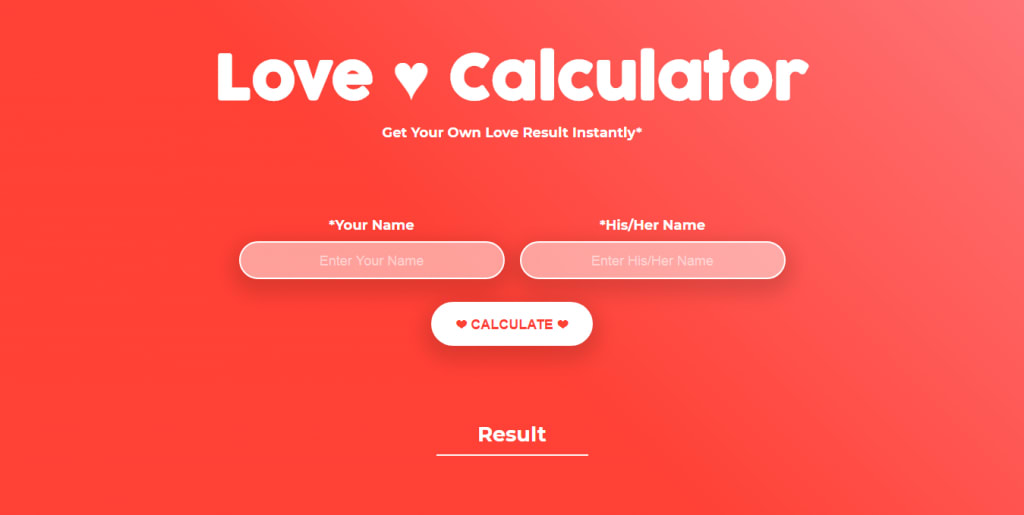
A love calculator name tool is an online-style calculator concept that compares two names and generates a numerical result representing a possible love match. The process is usually simple: enter your name, add the name of your crush or partner, and let the calculator display its result. Some versions provide only a percentage, while others add romantic messages, compatibility descriptions, or playful relationship suggestions. These features make the experience entertaining for couples, friends, and people who are curious about someone special.
However, it is important to understand what these results actually mean. A name-based calculator does not have the ability to measure genuine emotions, predict the future, or determine whether two people will build a successful relationship. Its primary purpose is entertainment. When approached with the right expectations, it can be a lighthearted activity that encourages conversations about feelings without creating unnecessary pressure or unrealistic expectations.
What Is a Love Calculator Name Tool?
A name-based love calculator is a digital entertainment tool that generates a compatibility score from two names. It is designed around the familiar idea that names can be used as a playful starting point for exploring romantic connections. Users typically enter their own name and the name of another person, after which the calculator processes the information and displays a result, often expressed as a percentage between zero and one hundred.
The appeal comes from its simplicity. Unlike relationship questionnaires that ask about communication, personal values, interests, and emotional needs, a name calculator usually requires only a few seconds to use. This makes it accessible to people of different ages and backgrounds. Someone might try it while chatting with friends, planning a playful social media post, celebrating an anniversary, or simply wondering whether their name and a crush’s name produce an interesting combination.
The result should be understood as a game rather than a scientific assessment. Two names alone cannot reveal how well people understand each other, whether they share important values, or how they respond to challenges. Nevertheless, the calculator can provide a fun conversation starter when both people understand that the score is not a serious judgment of their relationship.
How Does a Love Calculator Work?
The calculation method depends on the particular tool being used. Some calculators rely on simple mathematical operations, while others use predefined rules or random number generation to produce a percentage. A basic version may assign numerical values to letters, combine those values, and convert the result into a score. Another version might use the characters in both names to generate a result according to a programmed formula.
For example, imagine that a user enters the names Rahul and Priya. The calculator might display a compatibility score of 78%. Another calculator using different rules could produce 64% or 92% for exactly the same names. This difference illustrates why these results should not be treated as objective measurements. There is no universally accepted scientific formula that can determine romantic compatibility by analyzing names alone.
Some tools also include additional features, such as animated hearts, romantic messages, or short descriptions of the generated percentage. These elements make the experience feel more personal and engaging. Yet the descriptions are generally entertainment content rather than conclusions based on information about the two individuals.
Common Methods Used for Name Compatibility
Different calculators may follow different approaches, but the most common methods include:
-
Letter-based calculations: Letters are assigned numerical values and processed using a basic formula.
-
Name combination methods: Characters from both names are combined according to predefined rules.
-
Randomized scores: The calculator generates a percentage without a meaningful relationship to the names.
-
Prewritten interpretations: The result is paired with a romantic message based on the displayed score.
Understanding these methods helps users recognize that the same pair of names may receive different results across different calculators. The percentage reflects the tool’s programming, not a verified prediction of romantic success.
Why Are Name-Based Love Calculators Popular?
One major reason for their popularity is that they make romantic curiosity easy to explore. Relationships can involve uncertainty, particularly when someone has a crush and does not know whether the other person feels the same way. A simple calculator provides an entertaining activity without requiring a serious conversation or an emotional commitment. Users can enter two names, view the result, and enjoy the moment without needing to explain their feelings.
Another reason is the social nature of the experience. Friends may compare results for celebrity couples, fictional characters, classmates, or people they admire. Couples might use the calculator during a date or as part of a playful anniversary activity. The result can lead to jokes, teasing, and conversations about what each person appreciates in a relationship. In this context, the experience is less about discovering a supposedly accurate score and more about enjoying time together.
The popularity of these tools also reflects the appeal of simple, shareable digital entertainment. A percentage is easy to understand and can create an immediate reaction. A high score might make someone smile, while a low score might become a humorous topic of discussion. As long as people do not confuse entertainment with genuine relationship guidance, the activity can remain enjoyable.
Understanding Love Compatibility Percentages
Compatibility percentages are usually presented as the main feature of a name calculator. A result of 90% may appear more promising than a result of 35%, but the difference does not establish that one relationship is more likely to succeed than another. Without a validated measurement method, these numbers have no reliable predictive meaning.
A high percentage may feel exciting, especially when it appears for the name of a crush or romantic partner. Users can enjoy the result as a playful coincidence, but they should avoid interpreting it as proof that another person has romantic feelings. Likewise, a low score should not create disappointment or anxiety. It does not mean that two people are unsuitable for each other, nor does it provide a reason to end or avoid a relationship.
The following table explains how different results might be interpreted in an entertainment-focused setting.
| Love percentage | Playful interpretation | What it actually tells you |
|---|---|---|
| 0–30% | An unexpected match | Nothing reliable about compatibility |
| 31–50% | A mysterious connection | The result depends on the calculator’s method |
| 51–70% | An interesting combination | No verified prediction of relationship success |
| 71–90% | A promising-looking match | A fun result, not evidence of mutual feelings |
| 91–100% | A perfect-looking match | No guarantee of a lasting relationship |
These ranges are illustrative rather than universal. Different tools may use different descriptions or percentage categories, and none of these ranges has established scientific validity for measuring romantic compatibility.
How to Use a Love Calculator Name Tool
Using a name-based calculator is generally straightforward. Most versions follow a similar process, although the interface and available features may differ. Users do not normally need specialized knowledge or lengthy instructions to understand the basic activity.
Start by entering your first name in the designated field. Next, enter the first name of the person whose compatibility you want to explore. Depending on the tool, you may be able to use full names or other variations. Once both entries are complete, select the calculation button and wait for the result. The calculator will typically display a percentage, sometimes accompanied by a short romantic interpretation.
For example, suppose Ananya wants to see what happens when she enters her name alongside the name of someone she likes. The calculator might return an 82% match and a cheerful message about a possible connection. She can enjoy the result as a playful moment, perhaps sharing a laugh with friends, without assuming that the other person necessarily shares her feelings.
When experimenting with different names, keep in mind that spelling changes can affect some letter-based formulas. Entering a nickname instead of a full name might generate a different score. This is another reason not to treat the result as a meaningful assessment of a person’s romantic future.
What Makes Two People Truly Compatible?
Although a calculator can generate an entertaining number, genuine compatibility depends on much more than names. A healthy relationship develops through mutual respect, emotional understanding, honest communication, and a willingness to work through differences. These qualities emerge through interactions and shared experiences, not through a numerical formula applied to two words.
Communication is especially important because it allows people to understand each other’s expectations, concerns, and boundaries. Two individuals might have very different personalities but still develop a strong relationship if they listen carefully, communicate respectfully, and appreciate their differences. Conversely, people who appear similar on paper may struggle when they cannot resolve disagreements or understand each other’s needs.
Shared values also play a significant role. Partners do not need identical interests, hobbies, or opinions, but they often benefit from understanding each other’s priorities. Discussions about trust, personal space, family expectations, future goals, and emotional support can reveal much more about compatibility than a name-based score.
Respect and consistency are equally valuable. A person who listens, keeps promises, respects boundaries, and communicates honestly demonstrates qualities that contribute to a stable relationship. These behaviors offer meaningful information about how a relationship might develop over time.
Signs of a Healthy Romantic Connection
Rather than relying on a percentage, consider whether a connection includes the following qualities:
-
Mutual respect: Both people value each other’s opinions, comfort, and boundaries.
-
Open communication: They can discuss feelings and disagreements without unnecessary hostility.
-
Trust and honesty: Their words and actions are reasonably consistent.
-
Shared effort: Both individuals contribute to maintaining the connection.
No relationship is perfect, and people can experience disagreements even when they care deeply about one another. What matters is how they respond to challenges, take responsibility for their actions, and work toward solutions together.
Can a Love Calculator Predict Your Romantic Future?
A name-based calculator cannot reliably predict whether two people will fall in love, get married, remain together, or experience a successful long-term relationship. Its output is not based on a validated psychological assessment of either person. Even when a tool produces an impressive percentage, the result does not establish anything about future events.
Relationships develop through a combination of personal choices, circumstances, emotional maturity, communication, and changing life experiences. Someone who initially appears shy may gradually become more comfortable expressing feelings. Two people who begin as friends might develop a romantic connection, while a relationship that starts with intense attraction may change over time. These possibilities cannot be reduced to the spelling of two names.
It is also important to remember that another person’s feelings cannot be discovered through a calculator. If you want to understand whether someone is interested in you, pay attention to their communication and behavior while respecting their boundaries. When the situation feels appropriate, an honest conversation is more informative than any generated percentage.
The most sensible approach is to enjoy the calculator as a small piece of entertainment while making real relationship decisions based on real experiences. A fun result can brighten your day, but it should never replace communication, trust, or personal judgment.
Creative Ways to Enjoy Name Compatibility Results
A name calculator can become more enjoyable when used as part of a lighthearted activity. Couples can try it during a casual date and compare their reactions to the result. Friends can enter the names of fictional couples and debate whether the displayed percentages match the characters’ personalities. Someone planning a celebration might also use the idea as a playful theme for a romantic game.
Another possibility is to compare the calculator’s result with a more meaningful conversation about relationship preferences. After viewing the score, two people could discuss what they value most in a partner, what makes them feel appreciated, or how they prefer to resolve disagreements. This transforms a simple entertainment activity into an opportunity to learn something about each other without giving the calculation undue importance.
The activity can also be used for personal reflection. A person with a crush might use the experience as a reminder to think about what they genuinely appreciate in that individual. Instead of focusing entirely on the percentage, they could consider whether conversations feel comfortable, whether interest appears mutual, and whether they feel respected.
When sharing results publicly, it is sensible to avoid exposing private information or tagging another person in a way that could embarrass them. Romantic interests can be personal, and not everyone enjoys having their relationships discussed online. Keeping the activity respectful ensures that its playful nature does not create unnecessary discomfort.
Privacy and Responsible Use of Online Calculators
Before entering names into any online tool, consider what information the service requests and how it may handle that information. A basic name calculator should not need sensitive details such as passwords, financial information, private messages, or identification documents. If a service requests unnecessary personal information to generate a simple percentage, there is little reason to provide it.
Some websites may collect technical information, use analytics, or store details entered into their forms. Practices vary, so users should not assume that every calculator offers the same level of privacy. Avoid entering full names or other identifying information when first names are sufficient for the entertainment activity.
It is also wise to be cautious about websites that make dramatic promises, such as claiming to reveal a soulmate, guarantee a marriage, or determine another person’s hidden emotions. Such claims should not be accepted merely because they are presented alongside a numerical result.
Responsible use means keeping expectations realistic, protecting personal information, and treating the experience as a game. These simple precautions allow users to enjoy the activity without giving it more influence over their personal lives than it deserves.
Conclusion
A love calculator name tool offers a simple and entertaining way to explore the idea of romantic compatibility. By entering two names and receiving a percentage, users can enjoy a playful experience that sparks curiosity, laughter, and conversations about relationships. Its straightforward format makes it appealing to couples, friends, and people who want to experiment with different name combinations. However, the displayed score should never be confused with a scientific measurement or a prediction of romantic success. Names alone cannot reveal mutual attraction, emotional maturity, shared values, or the ability to maintain a healthy relationship. Those qualities become clearer through communication, trust, respect, and the experiences people share over time.