

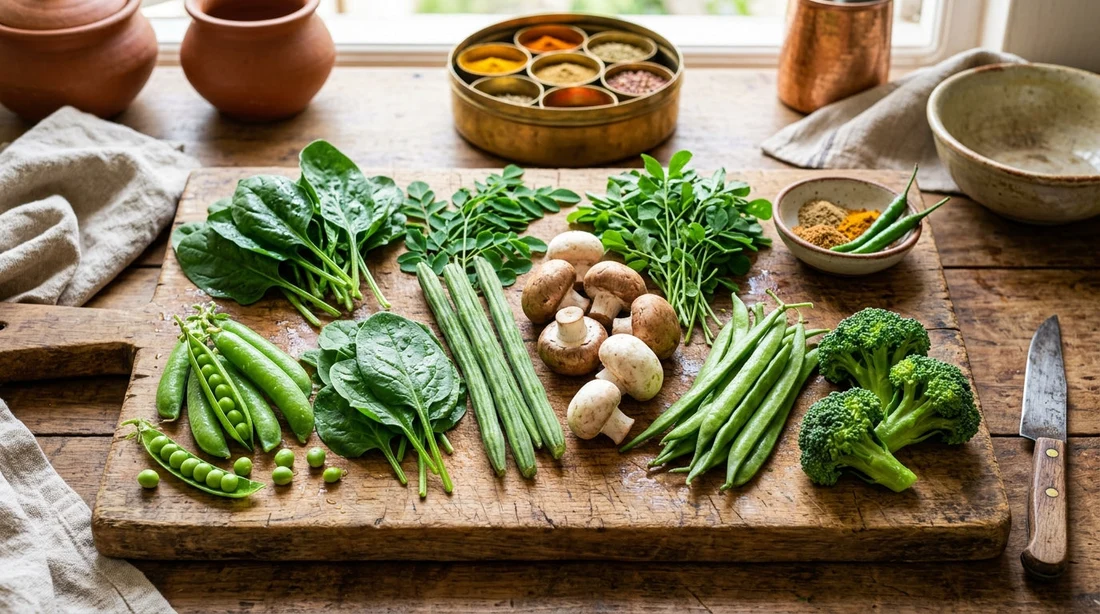

Vegetables are an essential part of a balanced diet because they provide vitamins, minerals, dietary fiber, and other nutrients that support everyday health. From leafy greens and root vegetables to colorful seasonal produce, each variety offers a different combination of nutrients, flavors, textures, and culinary uses. Including a wide selection of vegetables in daily meals can make food more enjoyable while helping people maintain healthy eating habits.
Learning the names of vegetables is useful for children, students, home cooks, gardeners, and anyone interested in improving their food knowledge. A well-organized vegetables name list can help people recognize familiar produce, discover less common varieties, plan grocery shopping, and prepare meals with greater variety. It is also helpful for educational activities, vocabulary development, school assignments, and general knowledge.
In India, vegetables are closely connected to regional cuisines, seasonal traditions, and everyday cooking. Potatoes, onions, tomatoes, spinach, cauliflower, okra, eggplant, and gourds are commonly used in homes, while vegetables such as broccoli, zucchini, and Brussels sprouts have also become more familiar in many markets. Understanding their names, characteristics, and uses makes it easier to choose suitable ingredients for different recipes and nutritional needs.
What Are Vegetables and Why Are They Important?
Vegetables are edible parts of plants that people commonly consume as part of meals. Depending on the plant, the edible portion may be a leaf, root, stem, flower, fruit, bulb, or immature seed pod. Spinach is eaten for its leaves, carrots for their roots, asparagus for its young stems, cauliflower for its flower structure, and green peas for their seeds. Although tomatoes, cucumbers, pumpkins, and eggplants are botanically classified as fruits, they are generally treated as vegetables in cooking because of their savory flavors and culinary uses.
Vegetables contribute to a varied diet by supplying nutrients that the body needs for normal functioning. Fiber supports digestive health, vitamin C contributes to normal immune function, vitamin A supports vision, and potassium helps maintain normal muscle and nerve function. Different vegetables provide different amounts of these nutrients, so eating a variety is generally more beneficial than relying on only one or two favorites. Fresh, frozen, and appropriately preserved vegetables can all contribute to healthy meals, depending on their preparation and nutritional composition.
Different Types of Vegetables
Vegetables can be grouped according to the parts of plants that people eat. This classification makes it easier to identify different varieties and understand their common characteristics. It is particularly useful for students learning plant science and for anyone who wants to organize a food list by category.
1. Leafy Green Vegetables
Leafy vegetables are valued for their tender leaves, distinctive flavors, and nutritional variety. Common examples include spinach, lettuce, cabbage, kale, fenugreek leaves, amaranth leaves, mustard greens, and coriander leaves. Many leafy varieties provide folate, vitamin K, carotenoids, and fiber, although their nutrient content varies. Spinach and fenugreek leaves are widely used in Indian cooking, while lettuce is commonly added to salads and sandwiches.
These vegetables can be prepared in several ways, including steaming, sautéing, boiling, and adding them to soups or curries. Some leafy varieties are eaten raw when suitable and properly washed, while others are generally cooked before serving. Their freshness is important because wilted leaves can lose their appealing texture. Choosing crisp leaves without excessive yellowing and storing them appropriately helps preserve their quality.
2. Root Vegetables
Root vegetables grow underground and store energy in their edible roots. Examples include carrots, beetroot, radishes, turnips, sweet potatoes, and parsnips. Carrots are known for their orange color and beta-carotene content, while beetroot provides folate and naturally occurring plant pigments. Radishes have a crisp texture and peppery flavor, making them suitable for salads, pickles, and traditional dishes.
Root vegetables are versatile ingredients that can be roasted, boiled, mashed, grated, or incorporated into soups and stews. Their natural flavors range from sweet to earthy and mildly spicy. Sweet potatoes, for instance, work well as a filling side dish, while carrots can be used in savory curries as well as desserts. When purchasing root vegetables, look for firm produce without extensive soft spots, mold, or major signs of damage.
3. Stem Vegetables
Stem vegetables are grown for their edible stems or shoots. Common examples include asparagus, celery, bamboo shoots, and kohlrabi, whose enlarged stem is eaten much like a root vegetable. These foods differ considerably in flavor and texture. Celery has a refreshing crunch, asparagus has a delicate grassy taste, and bamboo shoots are valued for their firm texture in various Asian dishes.
Stem vegetables can add variety to stir-fries, soups, salads, and roasted dishes. Some require peeling or trimming before cooking, particularly when their outer layers are tough. Bamboo shoots must be prepared appropriately according to the variety and product instructions because certain raw shoots contain naturally occurring compounds that can be harmful if not processed correctly. Proper preparation makes these vegetables useful additions to a diverse meal plan.
4. Flower Vegetables
Flower vegetables are consumed primarily for their edible flower buds or flower structures. Examples include cauliflower, broccoli, artichokes, and banana blossoms. Broccoli is recognized for its green florets and contains vitamin C, vitamin K, and fiber. Cauliflower has a mild flavor that allows it to absorb the seasonings used in curries, soups, roasted dishes, and vegetable rice preparations.
These vegetables are often steamed, roasted, sautéed, or incorporated into mixed vegetable recipes. Broccoli and cauliflower can become soft and lose some of their appealing texture when overcooked, so cooking them until tender but not mushy often produces better results. Banana blossoms are used in certain regional cuisines and usually require cleaning and preparation before cooking because of their layered structure and slightly bitter taste.
5. Fruit Vegetables
Fruit vegetables are botanically fruits because they develop from flowers and contain seeds, but they are commonly used as vegetables in everyday cooking. Tomatoes, cucumbers, eggplants, bell peppers, pumpkins, zucchini, and okra are familiar examples. Tomatoes provide vitamin C and lycopene, while bell peppers can be excellent sources of vitamin C. Cucumbers contain substantial water, making them refreshing additions to salads and snacks.
These ingredients are especially adaptable because they can be eaten raw when appropriate, cooked into curries, grilled, stuffed, or blended into sauces. Eggplant is widely used in dishes such as roasted brinjal preparations, while tomatoes form the base of countless sauces and gravies. Their botanical classification differs from their culinary classification, demonstrating why the word vegetable is often used according to cooking practices rather than strict plant science.
6. Bulb Vegetables
Bulb vegetables include onions, garlic, shallots, and leeks. Their underground or near-ground structures contain tightly arranged layers that store nutrients for the plant. Onions and garlic are particularly important in Indian cooking because they provide distinctive aromas and form the flavor base for many gravies, soups, marinades, and stir-fries. Leeks and shallots are also used in a range of international recipes.
These vegetables are generally valued for their flavor-enhancing properties rather than being eaten in large quantities on their own. Garlic contains sulfur-containing compounds, while onions supply fiber and various plant compounds. Storing dry bulbs in a cool, dry, well-ventilated location can help maintain their quality. Cut or peeled bulbs should be stored safely according to food-handling recommendations.
Popular Vegetables Name List in English
The following vegetables name list includes familiar varieties that are useful for everyday vocabulary, schoolwork, grocery shopping, and meal planning. Some names are widely recognized internationally, while others are particularly common in Indian households.
| Vegetable name | Category | Common use |
|---|---|---|
| Potato | Tuber | Curries, fries, mashed dishes |
| Tomato | Fruit vegetable | Gravies, salads, sauces |
| Onion | Bulb | Curries, soups, seasoning |
| Spinach | Leafy green | Dal, curries, stir-fries |
| Carrot | Root | Salads, soups, cooked dishes |
| Cauliflower | Flower | Curries, roasting, stir-fries |
| Cabbage | Leaf | Salads, rolls, stir-fries |
| Eggplant | Fruit vegetable | Bharta, curries, roasting |
| Okra | Fruit vegetable | Bhindi fry, curries |
| Cucumber | Fruit vegetable | Salads, raita |
| Radish | Root | Salads, parathas |
| Beetroot | Root | Salads, juices, cooked dishes |
| Green peas | Seed | Pulao, curries, soups |
| Pumpkin | Fruit vegetable | Soups, curries, roasting |
| Broccoli | Flower | Steaming, roasting, stir-fries |
| Garlic | Bulb | Seasoning, sauces, curries |
| Sweet potato | Tuberous root | Roasting, boiling, snacks |
| Bottle gourd | Fruit vegetable | Curries, soups, kofta |
| Bitter gourd | Fruit vegetable | Stir-fries, stuffed dishes |
| Bell pepper | Fruit vegetable | Salads, pizza, stir-fries |
Nutritional Benefits of Common Vegetables
Vegetables contain different combinations of vitamins, minerals, fiber, water, and beneficial plant compounds. Their nutritional value depends on the variety, growing conditions, ripeness, storage, and preparation method. Eating a range of colors is a practical way to increase dietary diversity because different pigments are associated with different plant compounds.
How Different Colors Contribute to a Balanced Diet
Green vegetables such as spinach, broccoli, and peas supply nutrients including folate, vitamin K, and other vitamins in varying amounts. Orange vegetables such as carrots and pumpkins can provide beta-carotene, which the body can convert into vitamin A. Red vegetables such as tomatoes contain carotenoids, including lycopene, while purple vegetables such as eggplant and purple cabbage contain anthocyanins or other plant pigments depending on the variety.
White vegetables, including cauliflower, onions, and garlic, also contribute valuable nutrients and plant compounds. No single color or variety provides everything the body needs. Combining vegetables with whole grains, pulses, fruits, nuts, seeds, and appropriate protein sources can create more balanced meals. Cooking methods matter, too: some nutrients become easier to absorb after cooking, while certain water-soluble vitamins may decrease with prolonged heating or excessive boiling.
How to Choose and Store Fresh Vegetables
Selecting fresh produce begins with observing its appearance, texture, smell, and condition. Leafy greens should generally look fresh rather than slimy or heavily yellowed. Carrots, radishes, and other roots should be reasonably firm, while tomatoes should be free from extensive mold and deep damage. Color alone does not guarantee freshness, and some vegetables naturally have different shades depending on the variety.
Storage requirements vary. Many leafy vegetables benefit from refrigeration, whereas dry onions and garlic usually last longer in a cool, dry, ventilated place. Potatoes should be kept away from excessive heat and light, and produce that releases ethylene can affect the ripening of nearby sensitive vegetables. Washing vegetables under clean running water before preparation is a useful food-safety practice. Avoid using soap or household detergents on produce, and refrigerate cut vegetables promptly when required.
Simple Ways to Include More Vegetables in Daily Meals
Increasing vegetable intake does not necessarily require complicated recipes or expensive ingredients. Small changes to familiar meals can make vegetables easier to incorporate consistently. Adding peas and carrots to rice, spinach to lentils, cabbage to sandwiches, or chopped vegetables to omelets can improve meal variety without significantly changing cooking routines. Soups, mixed vegetable curries, stuffed parathas, and roasted vegetable bowls are other practical options.
Here are a few easy approaches for everyday cooking:
-
Add at least one vegetable to lunch and dinner, adjusting portions to your needs.
-
Combine vegetables of different colors and textures in salads, curries, and stir-fries.
-
Keep suitable frozen vegetables available for quick meals when fresh produce is limited.
-
Use herbs, spices, lemon, and moderate amounts of healthy oils to enhance flavor.
Meal planning can also help reduce food waste. Buying seasonal produce, preparing only what is needed, and using suitable leftovers in soups or mixed dishes can make grocery spending more efficient. For example, leftover cooked carrots, peas, and cauliflower can be added to rice or a savory pancake mixture the following day, provided they have been stored safely.
Seasonal Vegetables and Their Role in Everyday Cooking
Seasonal availability influences vegetable prices, freshness, taste, and variety. In many parts of India, winter markets commonly feature carrots, peas, cauliflower, radishes, and leafy greens. Summer often brings greater availability of gourds, cucumbers, okra, and other heat-season produce, although local weather and growing conditions influence what is available. Different regions may have different harvest periods, so seasonal choices are best made according to local markets.
Choosing seasonal vegetables can introduce new flavors while making meal planning more economical. It also encourages people to use ingredients that are familiar to local farmers and food traditions. However, seasonal produce is not automatically more nutritious than every non-seasonal alternative, and frozen vegetables can remain useful when a particular variety is unavailable. The most practical approach is to choose a diverse selection that fits the household budget, dietary needs, and local availability.
Conclusion
Understanding vegetable varieties helps people make informed food choices, expand their cooking skills, and develop a more varied diet. From leafy spinach and root carrots to flower broccoli, bulb onions, and fruit vegetables such as tomatoes and eggplants, every category offers different culinary possibilities. Learning their names also supports school assignments, food vocabulary, gardening interests, and everyday grocery shopping. A useful vegetables name list is more than a collection of words; it is a starting point for exploring food, nutrition, and cooking traditions. By choosing a variety of vegetables, storing them correctly, preparing them safely, and incorporating them into familiar meals, people can build practical and sustainable eating habits. Rather than focusing on one supposedly perfect vegetable, aim for variety, seasonal flexibility, and balanced meals that make healthy eating enjoyable over time.