

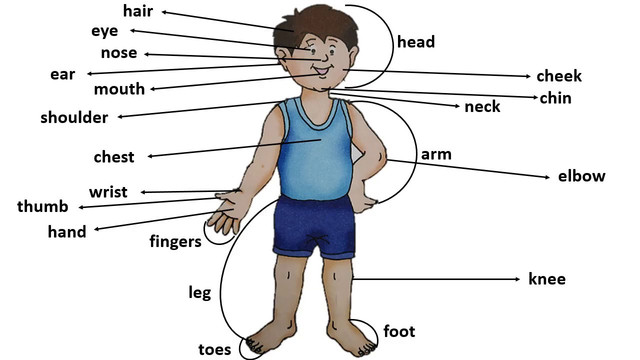

Learning the body parts name is one of the first steps in understanding the human body. From the head, eyes, ears, and nose to the hands, legs, heart, and lungs, every part has an important role. Knowing these names helps children develop basic vocabulary, supports students studying science, and makes everyday communication about health and the body easier.
The human body is made up of many interconnected structures. Some are visible from the outside, while others are located inside the body and cannot be seen without medical equipment. Bones provide support, muscles create movement, organs perform essential functions, and systems work together to keep the body alive. A simple understanding of anatomy can therefore make it easier to learn how the body functions as a whole.
Understanding the Main Body Parts
The easiest way to learn anatomy is to divide the body into major regions. These include the head, neck, torso, arms, and legs. Each region contains several smaller structures that perform different tasks.
The head contains the brain and important sensory organs. The face includes the eyes, ears, nose, and mouth. The neck connects the head to the torso and contains structures that help with breathing, swallowing, blood circulation, and movement.
The torso, also called the trunk, includes the chest and abdomen. It protects several vital organs, including the heart, lungs, stomach, liver, and intestines. The arms and legs form much of the body’s external structure and are essential for movement, balance, and daily activities.
External Body Parts and Their Functions
Many body structures can be identified simply by looking at a person. These external parts protect the body and help us interact with our surroundings.
The skin is the body’s largest external organ. It forms a protective barrier against the environment and contains sensory receptors that help detect temperature, pressure, and touch. Beneath the skin are muscles, connective tissues, blood vessels, nerves, and bones.
The eyes allow us to see light, colors, shapes, and movement. The ears are responsible for hearing and also contribute to balance. The nose plays a role in smelling and helps filter, warm, and humidify incoming air. The mouth is important for eating, speaking, tasting, and beginning the digestive process.
Hands are particularly useful because they allow people to grasp, hold, write, and perform delicate movements. Feet support the body and help with walking, standing, running, and maintaining balance.
Body Parts Name and Their Everyday Functions
Understanding names becomes easier when each structure is connected with a familiar function. Instead of memorizing isolated vocabulary, learners can associate a body part with something it helps them do.
For example, the fingers help with gripping and fine movements, while the thumb provides an important opposing movement that makes grasping objects easier. The shoulders connect the arms to the upper body and allow a wide range of arm movements.
The elbows allow the arms to bend and straighten. The wrists connect the hands to the forearms and support hand movement. Similarly, the knees connect the upper and lower portions of the legs and help the body walk, sit, climb, and run.
Other familiar structures include the ankle, heel, toes, hips, waist, chest, back, and abdomen. Each contributes to posture, movement, protection, or other essential functions.
Internal Organs You Should Know
Not all important structures are visible externally. Internal organs perform many of the processes necessary for survival. Learning their names provides a basic introduction to human anatomy.
The brain is the main control center of the nervous system. It helps regulate thoughts, memory, movement, emotions, senses, and many automatic processes. The heart pumps blood throughout the body, delivering oxygen and nutrients while helping carry away waste products.
The lungs are responsible for exchanging oxygen and carbon dioxide during breathing. The stomach helps break down food, while the small intestine absorbs many nutrients. The large intestine absorbs water and helps form waste.
The liver performs numerous functions, including processing nutrients and producing substances needed by the body. The kidneys filter the blood and help regulate fluid and electrolyte balance. These organs work together as part of larger body systems rather than functioning independently.
A Useful Table of Common Body Parts
The following table provides a simple way to connect common anatomical terms with their general functions.
| Body Part | Main Function |
|---|---|
| Brain | Controls and coordinates many body activities |
| Heart | Pumps blood around the body |
| Lungs | Exchange oxygen and carbon dioxide |
| Eyes | Provide vision |
| Ears | Support hearing and balance |
| Nose | Helps with smell and breathing |
| Mouth | Supports eating, speaking, and tasting |
| Stomach | Helps digest food |
| Liver | Processes nutrients and performs metabolic functions |
| Kidneys | Filter blood and regulate body fluids |
| Skin | Protects the body and provides sensation |
| Bones | Support and protect the body |
| Muscles | Produce movement |
| Hands | Help with grasping and precise movements |
| Feet | Support movement and balance |
This table is especially useful for beginners because it combines anatomy vocabulary with practical information.
Major Body Systems and Their Parts
The human body is organized into several systems. Each system contains organs and tissues that cooperate to perform specific functions.
The skeletal system consists mainly of bones and associated structures. It provides support, protects organs, and works with muscles to create movement. The muscular system contains muscles that allow the body to move and maintain posture.
 The circulatory system includes the heart, blood, and blood vessels. It transports oxygen, nutrients, hormones, and other substances around the body. The respiratory system includes the lungs and airways and is responsible for breathing and gas exchange.
The digestive system breaks food into nutrients that the body can absorb and use. The nervous system, involving the brain, spinal cord, and nerves, helps receive information, process signals, and coordinate responses.
The urinary system includes the kidneys and structures involved in removing certain wastes from the body. Although these systems have specialized jobs, they continuously interact to maintain normal body function.
Body Parts Name for Children and Beginners
For children, learning anatomical vocabulary can be more effective when lessons are visual, interactive, and connected to everyday activities. Parents and teachers can introduce a few terms at a time rather than presenting a long list.
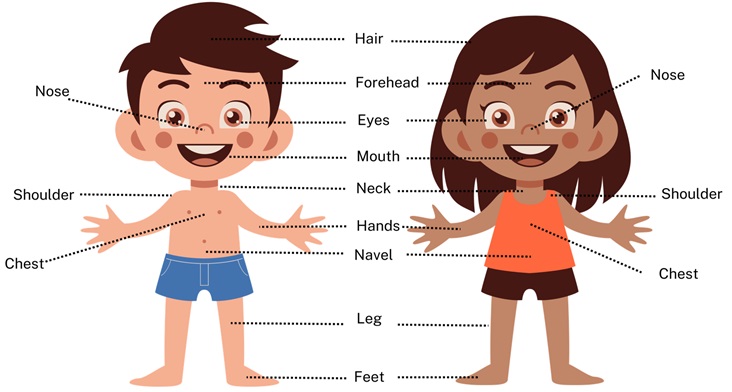
A simple lesson might begin with the head and face. Children can identify the hair, eyes, ears, nose, mouth, cheeks, chin, and teeth. The lesson can then move to the neck, shoulders, arms, hands, fingers, chest, stomach, legs, knees, feet, and toes.
Simple questions can reinforce learning. For example, asking “Which part helps you see?” encourages the learner to connect the eyes with vision. Asking “Which part helps you walk?” creates a natural association between the feet and movement.
This approach turns vocabulary practice into an active learning exercise instead of simple memorization.
Why Learning Anatomy Vocabulary Matters
Knowing the body parts name is useful beyond school lessons. Clear anatomical vocabulary makes it easier to describe discomfort, injuries, movement, or other physical experiences. It can also help learners understand health information and communicate more confidently with teachers, parents, caregivers, or healthcare professionals.
For students, these terms provide a foundation for subjects such as biology, anatomy, nursing, medicine, sports science, and physical education. Even people who do not study healthcare can benefit from understanding basic anatomy because the human body is part of everyday life.
Learning these terms also improves language skills. Many anatomy words appear in books, educational materials, exercise instructions, health discussions, and general conversation.
Simple Ways to Remember Body Parts
Memorization becomes easier when learners organize information logically. Start from the top of the body and move downward, or group words according to their location and function.
Helpful learning techniques include:
- Use labeled diagrams and point to each structure while saying its name.
- Group related parts, such as facial features, hand parts, or leg structures.
- Connect each term with its main function.
- Practice spelling and pronunciation regularly.
- Use short quizzes to check recall.
It is also useful to distinguish everyday names from scientific terminology as students become more advanced. For example, “kneecap” is commonly used in everyday language, while “patella” is the anatomical term.
Commonly Confused Body Parts
Some anatomical terms are easily confused because they are close together or perform related functions. The arm, for example, can refer broadly to the upper limb in everyday speech, but anatomically the arm specifically refers to the region between the shoulder and elbow.
Likewise, the leg technically refers to the area between the knee and ankle, although people often use the word to describe the entire lower limb. Understanding these distinctions becomes increasingly important in formal anatomy and healthcare education.
Other pairs, such as the wrist and ankle or the elbow and knee, can be remembered by considering their location and movement. Repeated practice with diagrams can make these distinctions much easier.
Building a Strong Foundation in Human Anatomy
Learning the body parts name is not simply about memorizing vocabulary. It is an introduction to how the human body is organized and how different structures cooperate. A person can begin with common external parts and gradually move toward internal organs, tissues, bones, muscles, and body systems.
A strong foundation also makes advanced topics easier to understand. Once learners know where major organs and structures are located, concepts such as circulation, digestion, respiration, movement, and nervous-system function become more meaningful.
Whether the goal is helping a child learn basic vocabulary or preparing for a science course, studying anatomy step by step is more effective than trying to memorize everything at once.
Conclusion
Learning the body parts name provides a practical foundation for understanding human anatomy. From visible structures such as the eyes, ears, hands, and feet to internal organs such as the heart, lungs, brain, and kidneys, every part has a role within the larger body.
The best approach is to learn terms by location, function, and relationship to other structures. Tables, diagrams, examples, and regular practice can make the process easier and more engaging. As learners progress, basic vocabulary can lead naturally into deeper studies of bones, muscles, organs, and body systems. A clear understanding of anatomy not only supports education but also improves everyday communication about the human body.