

.webp&description=Explore how a love calculator name tool estimates romantic compatibility using two names, understand its results, and discover fun ways to explore your connection.)
Love has always been one of the most fascinating parts of human life. From wondering whether a crush feels the same way to imagining a future with a special person, people naturally look for little signs that help them understand their romantic connections. In the digital age, online love games and compatibility tools have become popular ways to explore these feelings. One such entertaining option is a love calculator name tool, which generates a compatibility score using the names of two people. It offers a simple, playful experience for anyone curious about what their names might reveal about a potential romantic connection.
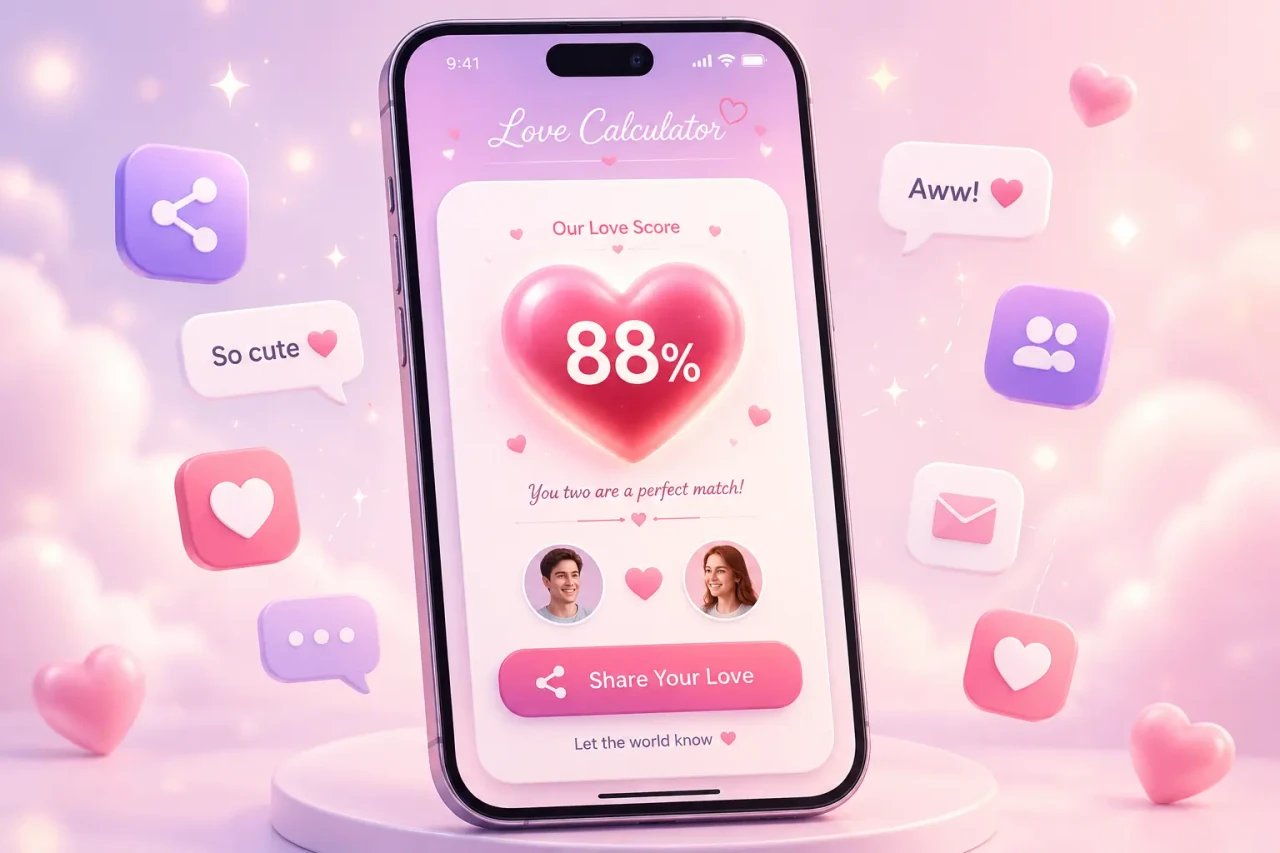
The appeal of these tools lies in their simplicity. Users generally enter their name and the name of someone they like, and the calculator produces a percentage or a short interpretation of their supposed compatibility. Some tools present their results with romantic messages, while others use colorful designs, hearts, and playful descriptions to make the experience more enjoyable. Whether someone is checking a crush’s name out of curiosity or sharing a result with a partner for fun, the activity can provide an entertaining conversation starter.
However, it is important to understand that a name-based calculation cannot determine whether two people are genuinely compatible. Real relationships depend on trust, communication, respect, shared values, and emotional understanding. A calculator can create a moment of excitement, but the quality of a relationship is shaped by the people involved rather than the letters in their names.
What Is a Love Calculator Name Tool?
A love calculator name tool is an online entertainment feature that estimates romantic compatibility by processing the names of two individuals. Depending on the design, it may generate a percentage, a compatibility label, or a short message about the imagined relationship. The experience is usually quick and straightforward, making it accessible to people who want to explore a fun romantic activity without answering lengthy questionnaires.
These calculators appeal to different audiences, including teenagers curious about their crushes, couples looking for a lighthearted activity, and friends who enjoy comparing playful results. For example, someone might enter their name alongside a classmate’s name and receive a score of 82 percent. The result may feel exciting, particularly if that person already has romantic feelings. Nevertheless, the percentage is generated by the tool’s calculation method and should not be interpreted as evidence of mutual attraction.
The concept also reflects a broader interest in relationship quizzes and personality-based entertainment. People often enjoy activities that give them a fresh way to think about their feelings. A name calculator provides that experience in a simple format, even though its output does not offer a scientifically established measure of romantic compatibility.
How Does a Name-Based Love Calculator Work?
The method depends on how a particular calculator has been designed. Some tools use basic numerical operations, while others assign values to letters, count repeated characters, or apply a predefined formula to the names entered by the user. The resulting number is then converted into a percentage or a descriptive message. Because there is no universal scientific formula for measuring love through names, different calculators can produce different results for the same pair of people.
For instance, imagine that a user enters the names Aarav and Priya. One calculator might display a high compatibility percentage, while another could return a lower score. Both outcomes may look convincing because they are presented as numerical results, but the difference comes from the underlying calculation method rather than a meaningful change in the relationship.
Some tools also incorporate random elements or preset interpretations to make their results feel more personalized. A high score might be associated with romance and harmony, while a lower score might suggest that the pair needs patience. These descriptions are entertainment content, not reliable predictions. Understanding this distinction allows users to enjoy the experience without giving a generated number more importance than it deserves.
Why Are Love Calculators Popular Online?
One reason for their popularity is convenience. Users can often receive a result within seconds, without creating an account or providing detailed personal information. The quick process makes these tools suitable for short breaks, casual conversations, and social activities. Their visual presentation can also make the experience feel exciting, especially when the result includes a romantic message or an animated celebration.
Another reason is curiosity. Romantic feelings can be uncertain, particularly when someone has a crush and does not know whether their interest is returned. A compatibility game offers a harmless way to explore that curiosity without having to express those feelings directly. Although the result cannot answer the real question, the activity can help someone start a conversation with friends or laugh about the possibilities.
Sharing results can make the experience even more engaging. Two friends might test several name combinations and compare their scores, or a couple might use the calculator during a casual evening together. The activity becomes a small form of digital entertainment rather than a serious assessment of the relationship. Its value comes from the enjoyment and conversation it creates, not from the accuracy of its predictions.
Understanding Love Compatibility Percentages
A compatibility percentage is usually the most noticeable part of a name calculator’s result. A score of 95 percent may appear more encouraging than a score of 45 percent, but neither number provides a dependable measurement of how well two people will get along. The percentage is simply the output of the tool’s particular algorithm.
It is helpful to view these results as part of a game. If the calculator produces a high score for two names, users can enjoy the result without assuming that a successful relationship is guaranteed. Similarly, a low score should not create unnecessary worry or discourage someone from getting to know another person. A numerical result cannot account for a person’s kindness, emotional maturity, reliability, or ability to communicate.
The following table explains how users can interpret common result ranges in a playful context.
| Example score | Entertainment interpretation | Realistic perspective |
|---|---|---|
| 80–100% | A supposedly strong romantic match | The score does not prove compatibility. |
| 60–79% | An encouraging connection | Getting to know each other matters more. |
| 40–59% | A mixed or uncertain match | A number cannot reveal mutual feelings. |
| 0–39% | A supposedly low match | The result is not a reason to reject someone. |
These ranges are illustrative rather than universal. Different tools may use different labels and scoring systems, and some may not explain their formulas at all. The most sensible approach is to treat every result as a fictional interpretation rather than a prediction of the future.
How to Use a Love Calculator Name Tool
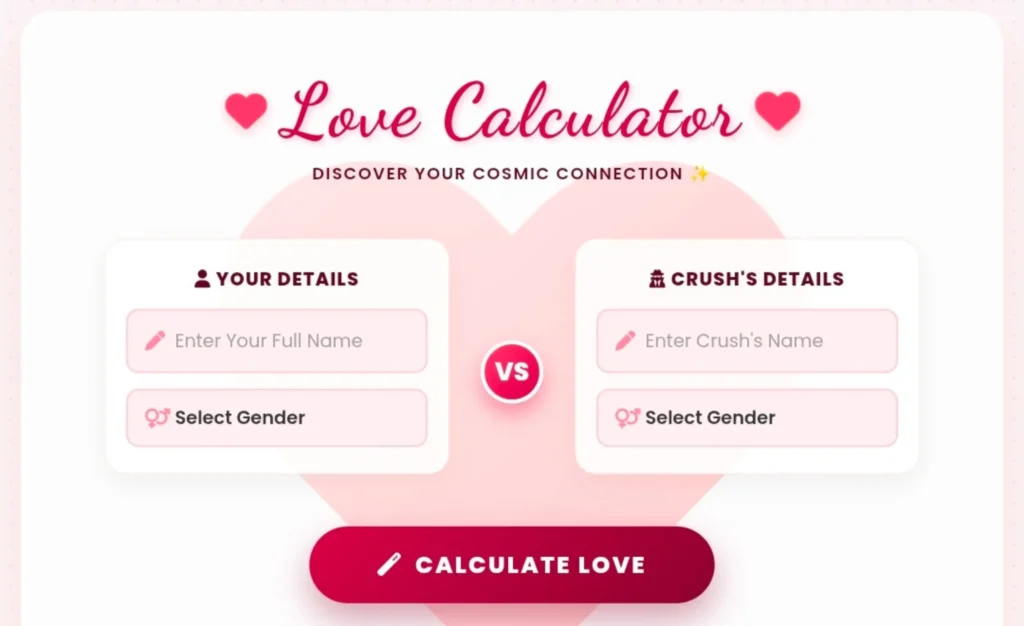
Using a love calculator is generally straightforward. Most versions require only two names and display the result after the user activates a calculation button. Although individual designs differ, the basic experience follows a familiar pattern.
First, enter your name into the appropriate field. Next, type the name of the person whose compatibility you want to explore. Check the spelling, because some calculators may process different spellings as different inputs. Once both names have been entered, select the calculation option and read the resulting percentage or message.
For the best experience, remember that the purpose is entertainment. Avoid using the result to make important decisions about dating, commitment, or ending a relationship. If you are interested in someone, respectful conversation and genuine interaction will tell you much more than a generated score.
A few simple practices can make the activity more enjoyable:
- Use the calculator as a game rather than a relationship test.
- Share results only when everyone involved is comfortable.
- Avoid comparing people’s worth based on their scores.
- Keep personal information private when using unfamiliar tools.
Following these basic principles helps maintain a positive experience while preventing a simple online activity from creating unrealistic expectations.
Can Name Calculators Predict True Love?
The short answer is no. There is no established scientific basis for predicting romantic success solely by analyzing two people’s names. A calculator can process letters and numbers, but it cannot directly measure attraction, emotional intimacy, shared goals, or the many other qualities that influence relationships.
A successful partnership develops through real interactions. Two people may have very different names and personalities yet build a strong relationship because they respect each other’s differences and communicate effectively. Meanwhile, two people who receive a perfect score from a calculator may struggle if they cannot resolve disagreements or understand one another’s needs.
Romantic compatibility is also more complex than a single percentage can represent. It can involve lifestyle preferences, expectations about commitment, emotional availability, personal boundaries, and approaches to handling conflict. These factors become clearer through conversation and shared experiences, not through a name-based formula.
For this reason, a love calculator is best understood as a playful digital activity. It can encourage curiosity or provide a reason to smile, but it should never replace thoughtful judgment. Real love is not confirmed by a numerical score; it develops through the way people treat one another over time.
Better Ways to Understand Romantic Compatibility
If you genuinely want to understand whether you and another person might make a good couple, paying attention to your interactions is much more useful than relying on a calculator. Notice whether conversations feel comfortable, whether both people show interest, and whether you can express your opinions without feeling pressured or dismissed.
Communication is particularly important. People do not need to agree about everything to build a healthy relationship, but they should be able to discuss differences respectfully. For example, two people might have different hobbies yet enjoy learning about each other’s interests. Their connection may grow because they are curious, considerate, and willing to spend meaningful time together.
Trust is equally valuable. A healthy relationship allows both individuals to maintain their independence while supporting each other’s goals. Respecting boundaries, keeping promises, and acknowledging mistakes can create a stronger foundation than any compatibility score. These qualities develop gradually and require consistent effort from both people.
It can also help to consider whether your expectations align. People may have different ideas about commitment, communication frequency, family involvement, or future plans. Honest conversations about these subjects can reveal whether a relationship has the potential to grow in a healthy direction. Unlike a name calculator, these conversations provide information that can genuinely help people understand one another.
Using Love Calculators Responsibly in the Digital Age
Online entertainment tools are easy to access, but users should still consider privacy and responsible use. Some calculators require only names, while others may request additional details such as birth dates, photographs, or contact information. Before submitting personal data, consider whether the information is necessary for a simple entertainment activity.
A trustworthy approach is to provide as little personal information as possible. Avoid entering sensitive details into unfamiliar websites, and be cautious about tools that ask for unnecessary permissions, payment information, or account credentials. A basic name game should not require access to private messages or unrelated personal accounts.
It is also important to respect other people’s privacy. Someone’s name may seem like a harmless detail, but sharing another person’s information without permission can make them uncomfortable, especially if the results are posted publicly. If you want to share a compatibility result on social media, consider whether the other person would be happy to have their name included.
Responsible use also means avoiding emotional dependence on the result. A low score should not become a source of insecurity, and a high score should not create pressure to pursue someone who has not expressed interest. Mutual consent, personal comfort, and honest communication always matter more than an online calculation.
Fun Ways to Enjoy Name Compatibility Games
Name calculators can be more enjoyable when treated as a social activity rather than a serious romantic evaluation. Friends can compare results for fictional couples, test different name combinations, or use the scores as prompts for humorous conversations. Couples can also try the activity together as a lighthearted way to spend time, provided both understand that the outcome is not a genuine prediction.

Another option is to turn the result into a conversation starter. Instead of focusing on whether the percentage is high or low, ask each other what makes a relationship feel meaningful. One person might value honesty, while another might emphasize emotional support or shared experiences. These discussions can be entertaining and may also reveal interesting differences in how people think about romance.
For people who enjoy creative activities, the calculator can inspire fictional stories or playful challenges. A group of friends might invent a romantic storyline around two names and compare it with the calculator’s description. The result becomes a source of imagination rather than a rule for real-life decisions.
The important thing is to keep the experience friendly and pressure-free. No score should be used to embarrass someone, question their feelings, or suggest that they must enter a relationship. When everyone understands the playful nature of the activity, it can remain a simple and enjoyable part of digital entertainment.
Common Misconceptions About Name-Based Compatibility
One common misconception is that a high percentage means two people are destined to be together. In reality, no calculation based solely on names can establish destiny or guarantee a romantic future. Relationships require participation from both individuals, and their success depends on circumstances and choices that a calculator cannot evaluate.
Another misunderstanding is that a low score means a relationship will fail. People sometimes interpret numbers too literally, particularly when they already feel uncertain about a crush. However, a calculator’s result has no established predictive value. A low score should not outweigh positive experiences, respectful communication, or the genuine feelings of the people involved.
Some users may also believe that changing the spelling of a name can improve romantic compatibility. While a particular algorithm might return a different result after a spelling change, that difference reflects how the tool processes its inputs. It does not mean the relationship itself has improved or become more promising.
Finally, users may assume that all calculators use the same formula. In practice, their methods and presentation can differ considerably. This is another reason not to compare scores across tools or treat the results as objective evidence. The most useful perspective is to enjoy the activity while remaining grounded in reality.
Conclusion
A love calculator name tool offers a simple and entertaining way to explore romantic curiosity. By entering two names, users can receive a compatibility percentage or a playful interpretation that may create excitement, laughter, or an interesting conversation. Its accessibility and straightforward design help explain why name-based love games continue to attract attention among people who enjoy online quizzes and relationship-themed entertainment.
However, the results should always be viewed in the right context. A generated score cannot establish whether someone loves you, determine whether a relationship will succeed, or reveal whether two people are destined to be together. Those questions depend on real feelings, shared experiences, mutual respect, and the choices people make throughout a relationship.