


Introduction
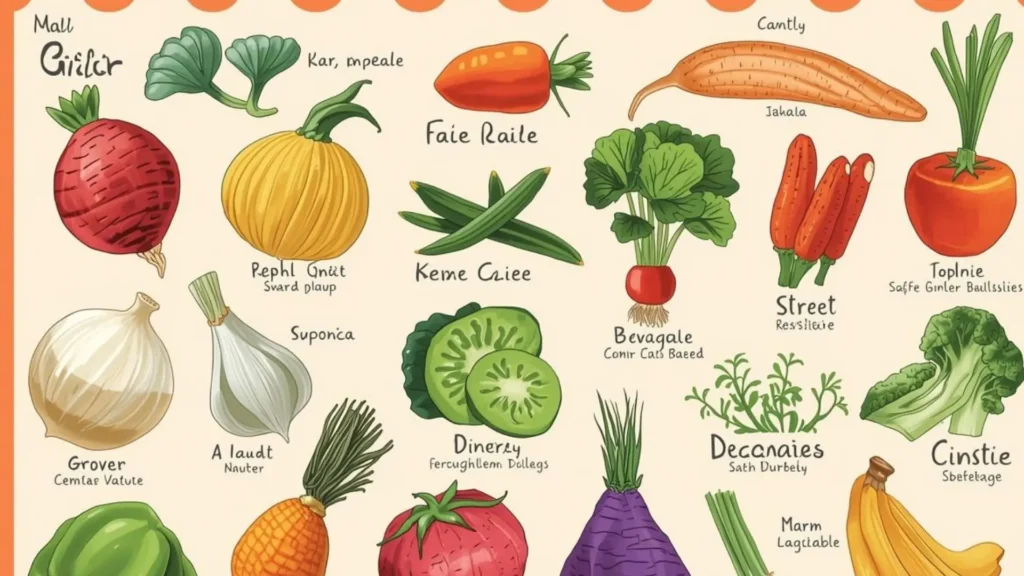
Learning the names of vegetables is useful for children, students, parents, travelers, and anyone who wants to improve their everyday vocabulary. Vegetables are an important part of a balanced diet and are used in different cuisines around the world. From familiar choices such as potatoes, tomatoes, carrots, and onions to leafy vegetables such as spinach and cabbage, every vegetable has its own appearance, taste, texture, and culinary use. A simple list of vegetables name can also help children recognize foods while learning English. In India, knowing vegetable names in both English and Hindi can make shopping and communication easier. This guide explains common vegetable names, their uses, basic nutritional benefits, and differences between various vegetable groups. It also provides a convenient table so readers can quickly learn and remember common vegetables used in everyday meals.
What Are Vegetables?
Vegetables are edible parts of plants that are commonly consumed as food. Depending on the plant, the edible portion may be a root, stem, leaf, flower, bulb, fruit, or seed. Vegetables can be eaten raw, cooked, steamed, boiled, roasted, grilled, or added to soups, curries, salads, and other dishes. They provide a variety of nutrients, including vitamins, minerals, fiber, and other naturally occurring plant compounds. Different vegetables offer different nutritional qualities, which is why eating a variety of them can make meals more diverse. When children learn vegetables name, they can develop vocabulary while becoming more familiar with healthy food choices. Vegetables also come in many colors, including green, red, orange, purple, and white. Their different colors, textures, and flavors make them useful ingredients for creating attractive and nutritious meals.
Common Vegetables Name in English and Hindi
The following table includes several commonly used vegetables along with their Hindi names. These names are frequently encountered in Indian homes, markets, restaurants, and educational materials.
| Vegetable Name in English | Hindi Name | Common Use |
|---|---|---|
| Potato | आलू | Curry, fries, snacks |
| Tomato | टमाटर | Curry, salad, sauces |
| Onion | प्याज | Curry, salad, cooking |
| Carrot | गाजर | Salad, juice, curry |
| Cabbage | पत्तागोभी | Sabzi, salad, noodles |
| Cauliflower | फूलगोभी | Curry, snacks |
| Spinach | पालक | Curry, soup |
| Brinjal | बैंगन | Curry, roasted dishes |
| Radish | मूली | Salad, paratha |
| Peas | मटर | Curry, rice dishes |
| Capsicum | शिमला मिर्च | Pizza, stir-fry, curry |
| Cucumber | खीरा | Salad, raita |
| Pumpkin | कद्दू | Curry, soup |
| Bottle Gourd | लौकी | Curry, soup |
| Bitter Gourd | करेला | Curry, stir-fry |
| Ladyfinger | भिंडी | Curry, fry |
| Beetroot | चुकंदर | Salad, juice |
| Turnip | शलजम | Curry, soup |
| Green Beans | हरी फलियाँ | Curry, stir-fry |
| Sweet Potato | शकरकंद | Roasted or boiled dishes |
Types of Vegetables
Vegetables can be grouped according to the part of the plant that people eat. Root vegetables grow below the soil and include carrots, radishes, turnips, and sweet potatoes. Leafy vegetables include spinach, lettuce, and other edible leaves. Stem vegetables include plants such as celery, while flower vegetables include cauliflower and broccoli. Bulb vegetables include onions and garlic. Some vegetables commonly called vegetables from a culinary perspective are botanically fruits, such as tomatoes, cucumbers, pumpkins, and capsicums. These differences make the world of vegetables especially interesting for students. Understanding these groups makes it easier to organize vegetables name and remember them according to their characteristics. It also helps children understand that plants provide food in many different forms, rather than only through fruits or seeds.
Green Vegetables and Their Importance
Green vegetables are widely appreciated because they add color, freshness, and variety to meals. Spinach, peas, green beans, cabbage, broccoli, okra, and capsicum are examples of vegetables with green varieties. Many green vegetables contain fiber and various vitamins and minerals. Leafy greens can be added to soups, curries, sandwiches, salads, and smoothies, depending on individual preferences. Green vegetables are also popular in Indian cooking, where they are prepared with spices, lentils, grains, or other vegetables. Introducing children to different vegetables name can encourage them to recognize and try a broader range of foods. Instead of relying on one or two familiar vegetables, families can rotate different seasonal options throughout the week. This creates variety in meals and allows people to experience different flavors and textures.
Root Vegetables
Root vegetables are plants in which the edible portion develops underground. Carrots, radishes, turnips, beetroot, potatoes, and sweet potatoes are common examples. They can be boiled, roasted, fried, mashed, added to curries, or eaten in salads. Root vegetables often have firm textures and can be stored for longer periods when kept under suitable conditions. Potatoes are among the most widely consumed vegetables and can be prepared in countless ways.
 Carrots are commonly eaten raw, cooked, or used in desserts and juices. Radishes are frequently included in salads and stuffed flatbreads in India. Learning these vegetables name can be particularly helpful for young students because root vegetables are easy to identify by their distinctive shapes and colors. Their different culinary uses also make them familiar ingredients in many households.
Leafy Vegetables
Leafy vegetables are valued for their fresh texture and nutrient content. Spinach, lettuce, fenugreek leaves, mustard greens, and coriander are commonly used leafy greens. They can be used in curries, soups, salads, sandwiches, wraps, and traditional dishes. Spinach is especially popular because it can be combined with lentils, paneer, potatoes, or other ingredients. Leafy vegetables generally need careful washing before preparation because soil and other particles can remain on their leaves. Fresh leaves should also be stored properly to maintain quality. For students learning vegetables name, leafy vegetables provide an easy way to expand vocabulary because many have distinctive shapes and textures. Learning their English and Hindi names together can make the information more practical for everyday communication, especially when visiting local markets.
How Vegetables Are Used in Everyday Cooking
Vegetables are among the most versatile ingredients in the kitchen. A single vegetable can often be prepared in several different ways. Potatoes can be boiled, roasted, mashed, or added to curries. Tomatoes can be used in sauces, soups, salads, and gravies. Cauliflower can be roasted, fried, steamed, or cooked with spices. Spinach can become a curry, soup, or filling. This flexibility makes vegetables suitable for breakfast, lunch, dinner, and snacks. Keeping a variety of vegetables at home can also make meal planning easier. When people understand vegetables name and their common uses, they can make better choices while shopping and cooking. Seasonal vegetables can provide additional variety throughout the year, while combining vegetables with grains, pulses, dairy products, or other foods can create satisfying meals.
Tips for Learning Vegetable Names
Learning vocabulary becomes easier when names are connected with pictures, colors, shapes, and real-life experiences. Children can begin with a small group of familiar vegetables and gradually add new ones. Repeating the names while shopping or preparing food can reinforce memory.
- Group vegetables by color or plant part.
- Learn English and Hindi names together.
- Use vegetable names in simple sentences.
- Practice identifying vegetables at a local market.
- Review a few new names each day.
Parents and teachers can also create simple quizzes using everyday vegetables. For example, they can show a vegetable and ask the child to name it in English or Hindi. Another useful activity is matching English names with Hindi names. These simple exercises turn vocabulary learning into a practical activity. Once children become familiar with common vegetables name, they can gradually learn less common varieties and their uses. Writing the names in a notebook and revising them regularly can further improve spelling and recall.
Benefits of Eating a Variety of Vegetables
Different vegetables provide different combinations of nutrients and plant compounds. Eating a variety can therefore contribute to a more diverse diet. Fiber-rich vegetables can support normal digestion, while many vegetables provide vitamins and minerals needed for everyday body functions. Colorful vegetables can also make meals more visually appealing, which may encourage children to explore new foods. However, no single vegetable provides everything the body needs, so variety is important. Vegetables can be combined with fruits, grains, pulses, nuts, seeds, and other foods to create balanced meals. Learning vegetables name is therefore not only a language exercise but also an opportunity to become more familiar with the foods commonly included in a healthy eating pattern.
Seasonal Vegetables
Seasonality can influence the availability, freshness, price, and variety of vegetables. Some vegetables are commonly associated with particular seasons, although modern farming and transportation make many varieties available throughout much of the year. Buying vegetables that are fresh and suitable for the local season can be a practical approach to meal planning. Local markets often provide a wide selection of vegetables, allowing families to experiment with different ingredients. Students can use seasonal shopping as a learning activity by making a list of vegetables and finding their English and Hindi names. This method connects classroom vocabulary with everyday life. Keeping a seasonal vegetables name list can also help families remember which ingredients they enjoy and which dishes can be prepared with them.
Conclusion
Vegetables are an essential and versatile part of cuisines around the world. From roots and leafy greens to bulbs, flowers, and other edible plant parts, they offer an impressive range of flavors, colors, textures, and cooking possibilities. Learning vegetables name in English and Hindi can help children improve their vocabulary while making everyday shopping and communication easier. A basic understanding of vegetable groups can also encourage people to explore more ingredients and add variety to their meals. Whether you are a student preparing for a vocabulary lesson, a parent teaching a child, or simply someone interested in food names, keeping a useful list of vegetables can be valuable. With regular practice and exposure to different vegetables, remembering their names becomes simple, practical, and enjoyable.