

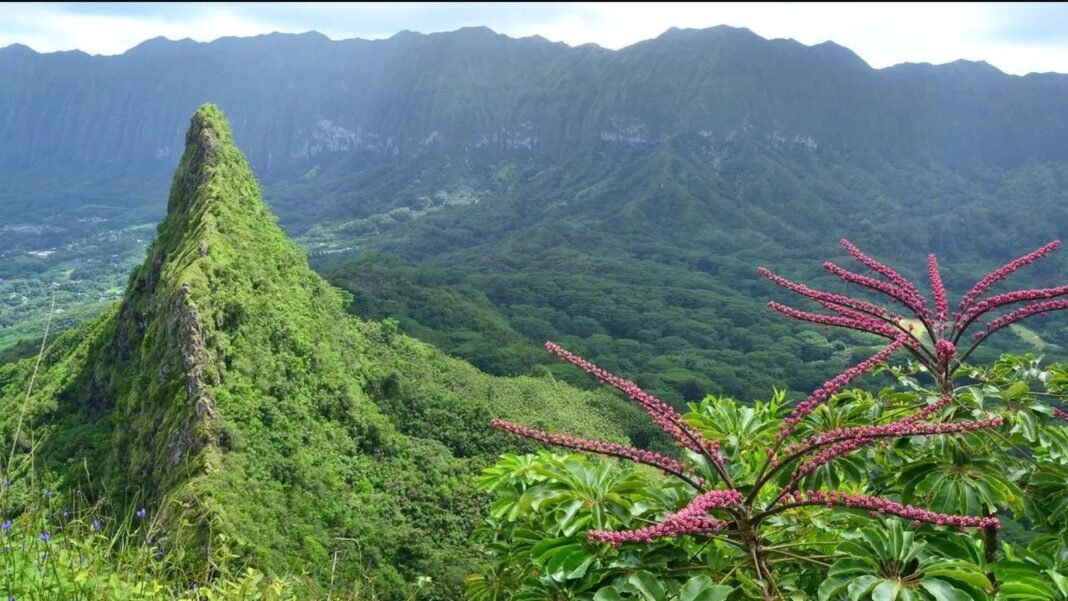

When people hear the question, “Can you name the rainforest that is so big it can be seen from space and influences weather across continents?” the answer is both fascinating and important. The rainforest in question is the Amazon Rainforest, the largest tropical rainforest on Earth. Covering millions of square kilometers across South America, this incredible ecosystem plays a vital role in regulating the planet’s climate, supporting biodiversity, and sustaining countless communities.
The Amazon is often referred to as the “lungs of the Earth,” although scientists explain that its greatest contribution lies in storing carbon and maintaining ecological balance rather than producing the majority of the world’s oxygen. Its immense size, rich wildlife, and environmental significance make it one of the most remarkable natural wonders on the planet.
This article explores why the Amazon deserves the title when people ask to name the rainforest that is so big. We will examine its geography, biodiversity, climate influence, challenges, and future importance while understanding why it continues to captivate researchers, travelers, and environmentalists worldwide.
What Is the Amazon Rainforest?
The Amazon Rainforest is the world’s largest tropical rainforest, stretching across multiple South American countries. Most of it lies in Brazil, but significant portions extend into Peru, Colombia, Venezuela, Ecuador, Bolivia, Guyana, Suriname, and French Guiana.
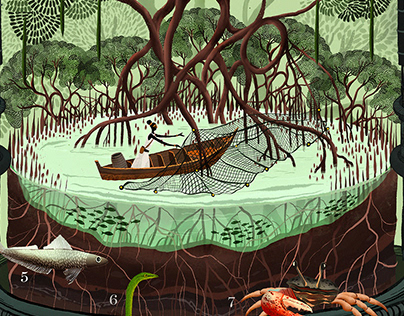
When asked to name the largest rainforest on Earth, the Amazon is the clear answer. Its massive area covers approximately 5.5 million square kilometers, making it larger than many countries combined. This extraordinary forest contains dense vegetation, thousands of rivers, and a vast network of ecosystems that support life on an incredible scale.
The Amazon Basin, where the rainforest is located, is drained by the Amazon River, the largest river by volume of water in the world. Together, the river and rainforest form one of Earth’s most important environmental systems.
Scientists have studied the region for decades, yet many areas remain unexplored. New species are still being discovered regularly, highlighting how much there is still to learn about this remarkable natural treasure.
Why Is the Amazon So Big?
One reason people often ask to name the rainforest that is so big is because the Amazon’s scale is difficult to imagine. Its vast size developed over millions of years due to favorable climatic and geological conditions.
The region receives abundant rainfall throughout the year, creating ideal conditions for dense forest growth. Warm temperatures, fertile floodplains, and extensive river networks have allowed ecosystems to flourish continuously for millions of years.
Several factors contribute to its enormous size:
- Consistent tropical climate
- Heavy annual rainfall
- Extensive river systems
- Diverse landscapes
- Long-term ecological stability
Because of these conditions, vegetation thrives year-round. Unlike forests in temperate regions, the Amazon does not experience harsh winters that limit growth. As a result, plant life develops continuously, creating dense canopies that stretch across enormous distances.
The rainforest’s vastness also enables it to generate much of its own rainfall through evaporation and transpiration, creating a self-sustaining environmental cycle that supports its continued existence.
Geographic Overview of the Amazon
Understanding the geography helps explain why the Amazon is often the answer when people name the world’s largest rainforest. The forest spans nine territories and dominates much of northern South America.
Amazon Rainforest by Country
| Country | Approximate Share of Amazon |
|---|---|
| Brazil | 60% |
| Peru | 13% |
| Colombia | 10% |
| Bolivia | 6% |
| Venezuela | 6% |
| Guyana | 3% |
| Suriname | 2% |
| Ecuador | 2% |
| French Guiana | 1% |
Brazil contains the largest portion of the rainforest, making it central to conservation efforts. However, protecting the Amazon requires cooperation among all countries that share responsibility for this critical ecosystem.
The rainforest’s geography includes lowland forests, wetlands, floodplains, mountains, and river systems. This variety of landscapes contributes significantly to its extraordinary biodiversity and ecological complexity.
Incredible Biodiversity
Perhaps the most remarkable feature of the Amazon is its biodiversity. When scientists name the most biologically diverse rainforest in the world, the Amazon consistently ranks at the top.
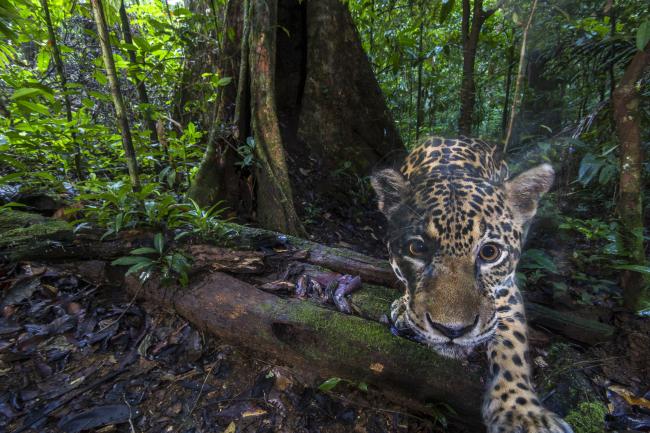
The region contains millions of species, including many that remain undiscovered. Researchers estimate that the Amazon houses around 10% of all known species on Earth.
Some notable wildlife includes:
- Jaguars
- Harpy eagles
- Pink river dolphins
- Sloths
- Anacondas
- Poison dart frogs
- Macaws
- Tapirs
The forest also contains an astonishing variety of plant life. Thousands of tree species grow within its boundaries, many with medicinal properties that scientists continue to investigate.
Each layer of the rainforest supports different organisms. The forest floor, understory, canopy, and emergent layer all provide unique habitats. This vertical diversity allows countless species to coexist within the same geographic area.
Because of this extraordinary richness, conservationists consider the Amazon one of the most valuable biological resources on Earth.
The Amazon River and Its Importance
No discussion about the Amazon is complete without mentioning the Amazon River. This massive waterway is closely connected to the rainforest’s health and productivity.
The river stretches thousands of kilometers across South America and carries more water than any other river on the planet. Its extensive network of tributaries reaches deep into the rainforest, supplying water to countless ecosystems.
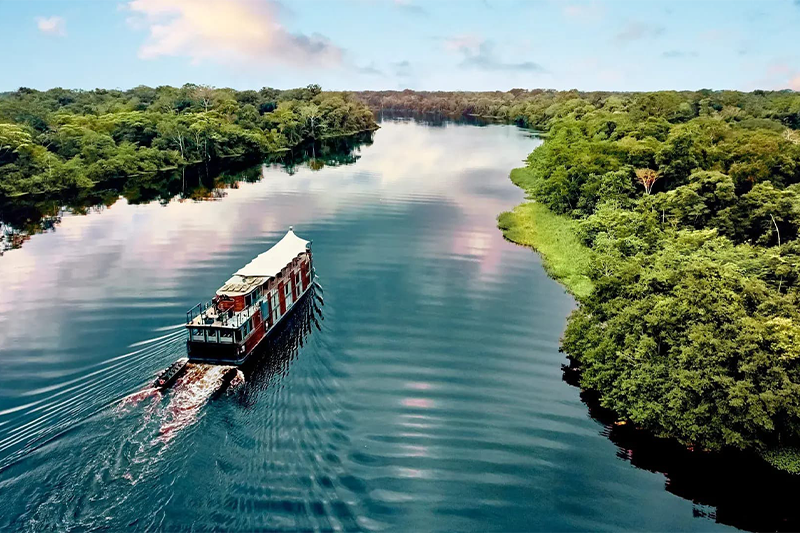
Seasonal flooding plays an essential role in maintaining soil fertility and supporting wildlife populations. Many species depend on flood cycles for breeding, feeding, and migration.
The river also serves as a transportation route for local communities. In many remote areas, waterways remain the primary means of travel and commerce.
Together, the river and rainforest form an interconnected system that supports both natural ecosystems and human populations throughout the region.
Climate Regulation and Global Impact
When experts name the most important ecosystems for climate regulation, the Amazon is always among them. Its influence extends far beyond South America.

The rainforest stores billions of tons of carbon within its trees and soils. By absorbing carbon dioxide from the atmosphere, it helps reduce the effects of climate change.
The Amazon also contributes significantly to rainfall patterns. Moisture released by trees forms atmospheric rivers that transport water across large portions of the continent.
These climate benefits include:
- Carbon storage
- Rainfall generation
- Temperature regulation
- Water cycle maintenance
- Ecosystem stability
Scientists warn that significant loss of rainforest could disrupt these processes, leading to reduced rainfall, higher temperatures, and ecological instability.
Protecting the Amazon is therefore not only a regional concern but also a global environmental priority.
Indigenous Communities and Cultural Importance
Long before modern nations existed, Indigenous peoples lived throughout the Amazon. Today, hundreds of Indigenous communities continue to call the rainforest home.
These communities possess extensive knowledge about local plants, animals, and ecosystems. Their traditional practices often promote sustainable resource management and environmental stewardship.
Many Indigenous groups rely on the rainforest for:
- Food
- Medicine
- Shelter
- Cultural identity
- Spiritual practices
Their connection to the forest spans thousands of years and provides valuable insights into living sustainably within complex ecosystems.
Protecting Indigenous rights has become an essential component of rainforest conservation. Studies frequently show that Indigenous-managed lands experience lower rates of deforestation compared to many surrounding areas.
As discussions continue about how to preserve the Amazon, Indigenous voices remain central to effective conservation strategies.
Threats Facing the Amazon Rainforest
Despite its immense size, the Amazon faces significant threats. When experts name the most pressing environmental challenges affecting tropical forests, deforestation often tops the list.
Major threats include:
Deforestation
Large areas of forest are cleared for agriculture, cattle ranching, and infrastructure development. This reduces habitat availability and increases carbon emissions.
Illegal Logging
Unauthorized timber extraction damages ecosystems and disrupts wildlife populations.
Mining Activities
Mining operations can pollute waterways and destroy forest habitats.
Climate Change
Rising temperatures and changing rainfall patterns place additional stress on forest ecosystems.
Wildfires
Human-caused fires can spread rapidly during dry conditions, destroying large areas of vegetation.
These challenges highlight the need for coordinated conservation efforts across governments, organizations, and local communities.
Conservation Efforts and Progress
Fortunately, numerous initiatives aim to protect the Amazon. Governments, environmental organizations, scientists, and Indigenous communities work together to preserve this vital ecosystem.
Conservation strategies include:
- Protected areas
- Sustainable land management
- Reforestation projects
- Wildlife monitoring
- Environmental education
- Indigenous land protection
Technological advances also support conservation efforts. Satellite monitoring helps identify illegal activities and track changes in forest cover more effectively than ever before.
International cooperation remains crucial because the rainforest spans multiple countries. Shared conservation goals can improve long-term outcomes for both people and nature.
While challenges remain, successful programs demonstrate that meaningful progress is possible when resources and commitment are aligned.
Why the Amazon Matters for the Future
The future of the Amazon will influence the future of the planet. When people name ecosystems that are essential for environmental stability, the Amazon consistently ranks among the most important.
Its continued health affects biodiversity, climate regulation, water resources, and human well-being. Protecting the rainforest helps preserve countless species while supporting global efforts to address climate change.
The Amazon also serves as a living laboratory for scientific discovery. Researchers continue uncovering new species, medicinal compounds, and ecological insights that may benefit future generations.
As populations grow and environmental pressures increase, sustainable development becomes increasingly important. Balancing economic needs with conservation goals will determine whether the rainforest remains resilient in the decades ahead.
The decisions made today will shape the Amazon’s future and, by extension, the health of ecosystems worldwide.
Conclusion
When asked to name the rainforest that is so big it influences climate, supports unparalleled biodiversity, and spans multiple nations, the answer is unquestionably the Amazon Rainforest. Its immense size, ecological importance, and cultural significance make it one of Earth’s most extraordinary natural treasures.