

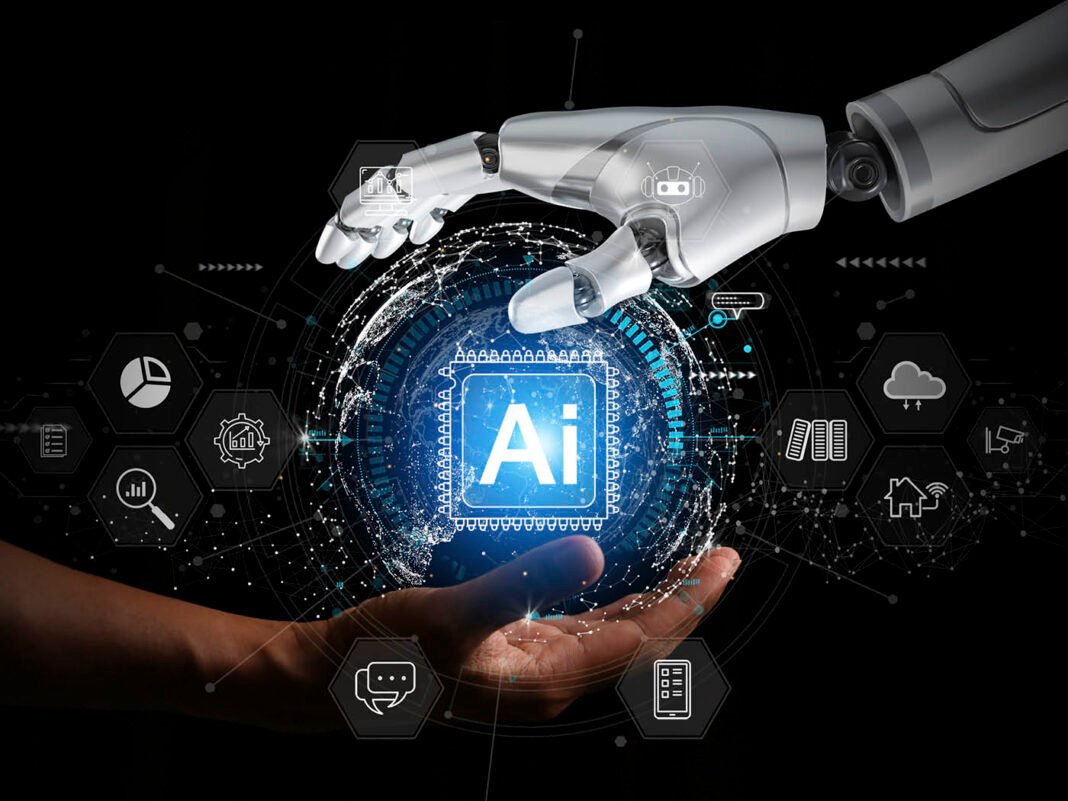

Artificial intelligence is changing how people work, learn, communicate, and use technology. From intelligent chatbots and AI-powered search engines to automated business tools and advanced image generators, new developments are creating opportunities across industries. Following artificial intelligence updates today helps readers understand how emerging technologies are evolving and what these changes could mean for everyday life, businesses, students, and professionals.
AI is no longer limited to research laboratories or large technology companies. It is becoming part of customer service, education, healthcare, finance, software development, entertainment, and digital marketing. Companies are investing in systems that can understand language, analyse information, generate content, and support complex workflows. At the same time, discussions about privacy, reliability, employment, and responsible innovation are becoming increasingly important. Understanding these developments requires looking beyond exciting announcements to examine practical applications, limitations, and long-term effects.
What Are Artificial Intelligence Updates Today?
Artificial intelligence updates today refer to recent developments involving AI technologies, products, research, regulations, and real-world applications. These updates may include new chatbot features, improvements to large language models, image and video generation tools, robotics advancements, AI-powered applications, and changes in how organisations adopt automation.
Technology companies regularly improve their AI systems to make them more useful, efficient, and accessible. Some developments focus on reasoning and problem-solving, while others improve speech recognition, translation, computer vision, or the ability to work with different types of information. AI tools are also becoming more integrated into everyday software, allowing users to complete tasks without switching between multiple applications.
However, a new product announcement does not automatically mean that a technology is available to everyone. Features may be released gradually, restricted to certain subscriptions, or limited to specific countries. Readers should distinguish between announced capabilities, independently evaluated performance, and features that are actually available for public use.
Major AI Technology Trends to Watch
One important trend is the development of multimodal AI. These systems can work with different forms of information, such as text, images, audio, and video. For example, a user might provide a photograph and ask an AI assistant to explain its contents, or submit a document and request a summary. Multimodal capabilities can make digital assistants more flexible for education, research, and business communication.
Another major trend is the growth of AI agents. Traditional chatbots generally respond to individual prompts, while agent-based systems are designed to complete sequences of tasks with varying levels of supervision. Depending on their permissions and capabilities, these systems may help organise information, prepare reports, analyse documents, or interact with connected software. Their usefulness depends on reliable planning, accurate results, suitable access controls, and effective human oversight.
Efficiency is also receiving attention. Developers are working to reduce the computing resources needed to operate AI systems. Smaller and specialised models can be useful for particular tasks, especially when organisations need lower costs, faster responses, or greater control over their data. This approach may allow more AI features to run on personal devices and business systems.
New Developments in Generative AI
Generative AI is a major area of technological change because it can create new content from instructions or existing information. Depending on the tool, users can generate written drafts, illustrations, presentations, music, video clips, summaries, and computer code. These capabilities are changing creative workflows and helping people produce initial versions of content more quickly.
For businesses, generative AI can support marketing ideas, product descriptions, customer communication, internal documentation, and brainstorming. Students can use it to explain difficult concepts, practise languages, and organise study materials. Developers can use coding assistants to explore solutions, understand unfamiliar code, and identify potential errors.
Despite these advantages, generated content needs review. AI systems can produce incorrect facts, misleading explanations, repetitive language, or material that does not match a user’s requirements. Images and videos may also contain visual inconsistencies. Copyright, consent, attribution, and data protection should be considered when using generated material commercially. The strongest results usually come from combining AI assistance with human expertise, original thinking, and careful editing.
Artificial Intelligence in Business and the Workplace
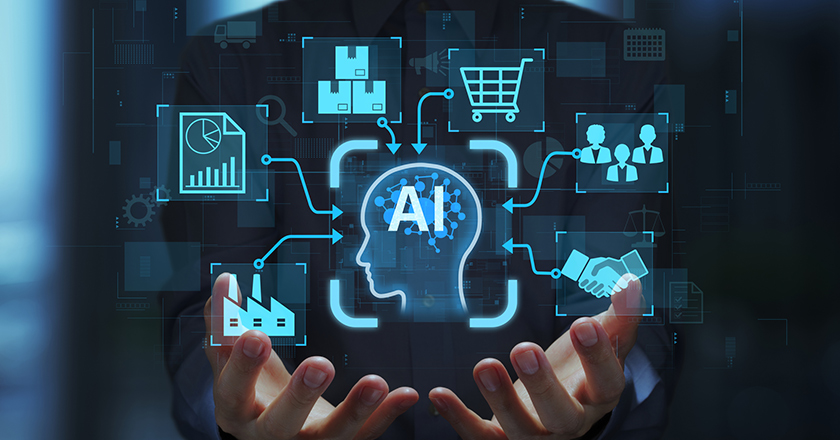
Businesses are increasingly exploring AI to improve productivity and manage repetitive work. Customer service teams can use conversational assistants to answer routine questions, while analysts can use AI tools to organise information and identify patterns. Human resources teams may apply automation to administrative tasks, and software teams can use AI-assisted development tools during coding and testing.
The value of these applications depends on the problem being solved. An organisation should identify a clear business need before selecting an AI product. For example, a company receiving thousands of customer enquiries may benefit from a carefully supervised support assistant. A smaller organisation might gain more value from automated document processing or meeting summaries.
AI adoption also changes the skills required in the workplace. Employees may need to learn how to write clear instructions, check generated answers, protect confidential information, and recognise situations requiring human judgement. Organisations should provide training and establish policies for acceptable use. AI can improve efficiency, but it does not remove the need for accountability, communication, or specialist knowledge.
AI Applications in Education and Healthcare
Education is another field where artificial intelligence offers practical possibilities. AI-powered learning tools can explain concepts in different ways, generate practice questions, provide language support, and help teachers prepare educational materials. Students can use these tools to explore topics at their own pace, although they should verify important information and follow their institution’s rules on academic integrity.
Healthcare applications include medical image analysis, administrative automation, clinical documentation, research support, and tools that help professionals organise patient information. Properly evaluated systems may help healthcare teams work more efficiently, but performance must be assessed carefully in real clinical settings. Medical decisions require qualified professionals, appropriate evidence, patient privacy protections, and established safety procedures.
In both sectors, responsible implementation matters more than novelty. Educational institutions should consider fairness, accessibility, and student data protection. Healthcare providers should assess accuracy, potential bias, and the consequences of errors before relying on AI-supported recommendations. These technologies are best understood as tools that can assist trained people rather than automatically replace professional judgement.
Artificial Intelligence and Everyday Life
AI is increasingly integrated into ordinary digital activities. People may encounter it through voice assistants, email filters, navigation applications, translation services, recommendation systems, photo editing software, and search tools. These features often operate in the background, making technology more convenient without requiring users to understand the technical systems behind it.
Personal productivity is another growing application. AI assistants can help users draft messages, summarise lengthy documents, plan projects, organise notes, and brainstorm solutions. Their usefulness depends on the quality of the instructions and the information supplied. Users should avoid entering sensitive personal, financial, or business information into tools unless they understand the relevant privacy protections.
Accessibility can also improve through speech-to-text systems, automated captions, translation, and tools that describe visual information. Such features can help people communicate and access digital content. Nevertheless, AI outputs may misunderstand accents, context, or specialised terminology, so users should check important results and provide feedback when available.
Latest Artificial Intelligence Updates Today
As of October 12, 2026, artificial intelligence news is increasingly focused on safety, workforce transformation, advanced research, and business adoption. One notable development is the growing discussion about stronger safeguards for advanced AI systems. Microsoft’s president, Brad Smith, has called for clearer global safety requirements, including incident reporting and mechanisms for responding to serious failures. This debate highlights the need to balance technological progress with public protection.
Another important development concerns employment. Discussions at the IMF and World Bank annual meetings have highlighted concerns about how AI could affect entry-level jobs and opportunities for graduates. At the same time, AI investment is contributing to economic activity, creating demand for new technical capabilities and encouraging businesses to rethink their workforce strategies. These developments suggest that AI education and practical digital skills will remain important for employees and job seekers.
India is also seeing increased attention to AI-related skills and applications. Tata Consultancy Services has indicated that digital and AI capabilities will be a major priority in its hiring plans, reflecting the growing role of AI-enabled work in the technology services industry. Separately, a government-backed initiative has committed ₹86 crore to support AI-powered drug discovery through the Peptris programme. These examples demonstrate how AI is influencing both employment strategies and scientific research.
These artificial intelligence updates today show that progress involves more than launching new models. Businesses, researchers, and policymakers are also considering how systems should be tested, secured, governed, and integrated into real working environments.
Key Areas to Monitor in AI News
The following table summarises major areas worth tracking when following developments in artificial intelligence.
|
AI development area |
What to monitor |
Potential impact |
|---|---|---|
|
Generative AI |
Improvements to text, image, audio, and video tools |
Faster content creation |
|
AI agents |
Task automation and supervised workflows |
Greater workplace productivity |
|
AI safety |
Testing, security, and incident reporting |
More reliable systems |
|
AI in healthcare |
Drug discovery and clinical research |
Support for scientific progress |
|
AI employment |
Hiring trends and changing job requirements |
New skills and career opportunities |
|
AI regulation |
Privacy, accountability, and governance |
More responsible adoption |
|
AI infrastructure |
Chips, computing resources, and energy use |
Changes in cost and availability |
How to Stay Updated on Artificial Intelligence
Keeping up with artificial intelligence updates today is easier when you follow a consistent process rather than relying on individual viral posts. Technology changes quickly, and social media discussions can sometimes exaggerate what a new product can actually do.
Use these practical steps to stay informed:
-
Follow official announcements: Check company newsrooms and research publications for confirmed product launches and technical developments.
-
Compare reliable reporting: Read established technology and business news sources to understand the context behind major announcements.
-
Check publication dates: Confirm when an article was published and whether its information has been updated.
-
Test tools carefully: Try new features using non-sensitive information before incorporating them into important workflows.
-
Verify impressive claims: Look for independent evaluations, documented results, and clear explanations of limitations.
-
Review privacy policies: Understand how AI services handle prompts, uploaded documents, and personal information.
-
Develop practical skills: Learn prompting, data analysis, AI-assisted research, and responsible verification.
Following these steps helps readers separate useful developments from speculation and make informed decisions about emerging technology.
Challenges and the Future of Artificial Intelligence
Despite rapid progress, AI continues to face several challenges. Systems can generate incorrect information, reflect biases in their training data, expose confidential information through poor implementation, or behave unpredictably when given complex tasks. Organisations must therefore consider security, testing, human supervision, and accountability before deploying AI in important settings.
Another challenge is unequal access. Advanced systems may require expensive computing resources, subscriptions, specialist knowledge, or reliable internet connectivity. Smaller businesses and educational institutions need affordable solutions that provide meaningful benefits without creating unnecessary technical complexity.
The future of AI will likely involve a combination of more capable models, specialised applications, automation, and stronger evaluation practices. The most valuable developments will not necessarily be the systems with the largest number of features. They will be technologies that solve real problems, produce dependable results, protect users, and work effectively alongside people.
Conclusion
Artificial intelligence is moving beyond experimentation and becoming an important part of business, education, healthcare, research, and everyday digital experiences. Current developments highlight three connected priorities: building more useful AI systems, preparing people for changing workplace requirements, and establishing effective safety practices.
For readers following artificial intelligence updates today, the best approach is to stay informed, verify announcements, understand the limitations of new tools, and explore practical applications. AI offers significant opportunities, but responsible adoption and human judgement remain essential to making those opportunities useful and sustainable.