

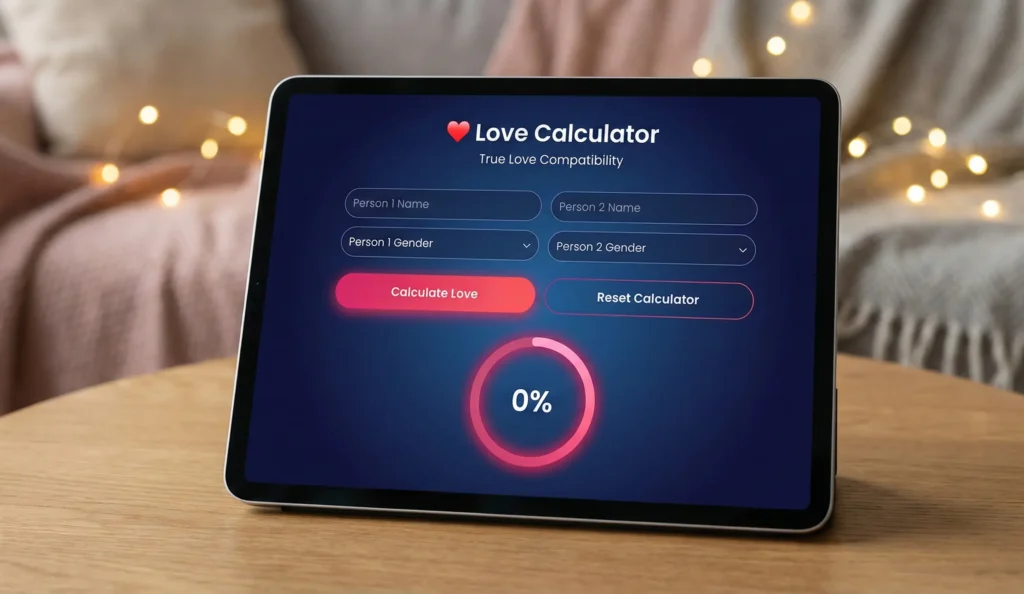

Love has always inspired curiosity, excitement, and countless questions about relationships. When two people begin to develop feelings for each other, they often wonder whether their personalities match, whether their connection will grow stronger, and whether their names share a special meaning. This curiosity has made name-based love calculators a popular form of online entertainment. They offer a simple and enjoyable way to explore romantic compatibility by entering two names and receiving a percentage or score that represents a playful connection between the individuals.
A love calculator name tool is designed for people who want a quick, entertaining experience while thinking about someone special. Users generally enter their own name and the name of a crush, partner, or someone they admire. The calculator then processes the names using a predefined formula or algorithm and displays a result. Some tools also provide short messages about romance, friendship, attraction, or emotional compatibility. Although these results can be exciting to share with friends, they should be understood as entertainment rather than a scientific prediction of a relationship’s future.
In today’s digital environment, people enjoy interactive tools that turn everyday curiosity into a memorable experience. Name compatibility calculators fit naturally into this trend because they are easy to use, require very little information, and produce results within seconds. Understanding how these tools work, what their scores mean, and how to interpret the results can make the experience more enjoyable without creating unrealistic expectations about love.
What Is a Love Calculator Name Tool?
A love calculator name tool is an entertainment-based calculator that compares two names to produce a romantic compatibility score. The result is usually displayed as a percentage, such as 65%, 82%, or 97%. Some calculators accompany the score with a short description, suggesting that the two people might share a strong connection, have an interesting friendship, or need more time to understand each other. The presentation varies depending on how the calculator has been designed, but the basic idea remains the same: two names go into the tool, and a result appears almost instantly.
The appeal of these calculators comes from their simplicity. Unlike detailed personality assessments, they generally do not require lengthy questionnaires or complicated information. A user can enter two names, click a button, and receive a result in a few moments. This makes the experience suitable for casual entertainment, conversations with friends, or lighthearted activities during a break. Some people also use these calculators as an icebreaker when talking to a crush, although the result itself cannot establish whether the other person has romantic feelings.
It is important to recognize that a name-based score does not measure actual attraction, emotional understanding, trust, or long-term compatibility. Two people with apparently compatible names may have very different expectations, while people with completely different names may build a strong and supportive relationship. Real compatibility depends on the individuals and the way they treat each other, not on the letters that make up their names.
How Does a Love Calculator Name Work?
The process behind a love calculator name tool depends on the particular method chosen by its creator. A simple calculator might convert letters into numbers, combine the numerical values of two names, and use a mathematical operation to generate a percentage. Another version might count shared letters, compare character patterns, or apply a fixed formula to produce a result. Some calculators use randomized outcomes or predefined compatibility messages instead of a meaningful mathematical comparison.
For example, imagine that two users enter the names Aarav and Priya. A calculator may process the letters in both names and return a compatibility score of 78%. Another calculator might produce 91% for exactly the same names because it uses a different formula. This difference demonstrates that the result depends on the tool’s design rather than an established measurement of romantic connection. There is no universal scientific formula that converts two names into a reliable prediction of love.
The following table explains common approaches used by name compatibility calculators.
| Calculation method | How it works | What the result means |
|---|---|---|
| Letter-based formula | Assigns numerical values to letters | A playful numerical result |
| Shared-letter comparison | Looks for letters appearing in both names | A simple pattern comparison |
| Numerical combination | Combines values derived from the names | A formula-generated score |
| Randomized calculation | Selects or generates a result using a random process | Entertainment without consistent name-based meaning |
| Predefined compatibility rules | Matches inputs with stored scores or messages | A result determined by the tool’s programmed rules |
These methods can create an engaging experience, but none of them can reliably establish whether two people are romantically suited to each other. Even when a calculator uses a consistent mathematical formula, the formula only describes how the score was generated. It does not demonstrate that the score measures love.
Why Are Name-Based Love Calculators So Popular?
One reason these calculators remain appealing is that romantic curiosity is a common human experience. People naturally look for ways to understand their feelings, especially when a relationship is new or uncertain. Entering two names and receiving a percentage creates a small moment of suspense. The result may be amusing, surprising, or exciting, even when users understand that the calculation is not scientifically meaningful.

Social interaction also contributes to their popularity. Friends may compare scores for their favorite couples, test the names of fictional characters, or challenge one another to predict which pair will receive the highest percentage. Couples can use the activity as a playful conversation starter, while people with a crush might use it to share a joke or begin a lighthearted discussion. These activities work because they encourage interaction rather than because the calculator provides reliable romantic insight.
The short and immediate format is another advantage. Modern internet users often prefer tools that provide an instant result without requiring registration or detailed personal information. A simple name calculator meets this expectation by offering a straightforward activity that can be completed in seconds. However, users should still pay attention to privacy practices and avoid entering sensitive personal information into unfamiliar websites or applications.
How to Use a Love Calculator Name Tool Correctly
Using a love calculator is generally straightforward. Most tools provide two text fields, one for each person’s name, followed by a button that starts the calculation. After entering both names, the user receives a score or compatibility message. Depending on the design, the result may appear immediately or after a brief animation intended to build excitement.
For the best experience, use the calculator as a fun activity rather than a serious relationship assessment. If the result is high, enjoy the moment without assuming that it guarantees romantic success. If the score is low, there is no reason to become worried or question a healthy relationship because of an arbitrary number. A calculator’s output cannot reveal someone’s intentions, emotional availability, or willingness to build a future together.
A simple approach can make the activity more enjoyable:
-
Enter the two names clearly and check for spelling mistakes.
-
Treat the score as entertainment rather than factual relationship advice.
-
Share the result with friends or a partner only when everyone is comfortable.
-
Avoid using the result to make important decisions about a relationship.
Following these basic guidelines helps keep the activity lighthearted. The most valuable part of the experience may be the conversation it creates, rather than the percentage displayed on the screen.
Understanding Love Compatibility Scores
Compatibility calculators often display their results as percentages because numbers are easy to understand and visually appealing. A score of 90% may appear more exciting than a score of 45%, particularly when someone is testing the name of a person they like. However, these percentages generally do not represent a statistically validated probability of falling in love, getting married, or maintaining a successful relationship.
Consider two hypothetical results. One pair receives 88%, while another receives 52%. Without a scientifically validated model, there is no evidence that the first pair is more likely to develop a lasting relationship than the second. The numbers simply reflect the calculator’s programming. Even a tool that generates the same result every time may lack any meaningful connection to the real qualities that determine relationship success.
A useful way to interpret these scores is to see them as conversation starters. A high score might encourage two people to laugh together, while a low score might inspire a playful debate about whether the calculator has made a mistake. Neither outcome should be used to judge a person’s value or determine whether a relationship deserves attention.
Real compatibility is better understood through communication, shared expectations, mutual respect, and the ability to resolve disagreements. These qualities develop through actual experiences and cannot be accurately reduced to a percentage derived from two names.
Can Names Really Predict Romantic Compatibility?
Names can have personal and cultural significance. They may connect people with their families, traditions, languages, or meaningful memories. Sometimes, two people may enjoy the sound of their names together or discover an interesting coincidence between them. These details can add a little charm to a relationship, but they do not establish whether the individuals will be emotionally compatible.

Scientific relationship research generally focuses on observable factors such as communication, emotional support, trust, shared values, and conflict management. A name-based calculation does not directly measure any of these qualities. Without reliable evidence connecting its method to real relationship outcomes, a calculator cannot determine whether two people are suited for one another.
For instance, imagine two people who receive a perfect score but regularly misunderstand each other, avoid difficult conversations, and disagree about important life goals. Their score cannot resolve those challenges. Now consider another couple who receive a low score but communicate honestly, respect personal boundaries, and support each other’s ambitions. Their relationship may be strong because of how they interact, regardless of the calculator’s output.
This distinction matters because people sometimes search for certainty when romantic feelings are involved. A playful tool can provide a moment of amusement, but meaningful decisions require better information. Getting to know someone, discussing expectations, and observing how they behave over time offer much more useful insight than comparing names.
Creative Ways to Enjoy Name Compatibility Calculators
There are several ways to make these calculators more entertaining without taking their results too seriously. One option is to test the names of fictional couples from books, films, or television shows. Friends can compare the resulting percentages and discuss whether the scores match their opinions about the characters. Since everyone already knows that the exercise is fictional, it becomes an easy way to start a conversation and share a laugh.
Another idea is to use the calculator during a casual gathering or a couples’ game night. Participants can submit different name combinations, guess the results before the calculation, and compare the outcomes. The activity works particularly well when everyone understands that a high or low percentage is not a judgment of their relationship. It can also be a lighthearted addition to birthday parties, friendship activities, or Valentine’s Day celebrations.
A love calculator name activity can even inspire a more meaningful conversation about relationships. After viewing the result, two people might discuss what they value most in a partner, what makes them feel appreciated, or how they define trust. These questions shift the focus from an arbitrary score to the qualities that genuinely matter in a relationship. In that way, an entertaining calculator can become the starting point for a useful discussion.
Privacy and Safety When Using Online Calculators
Although entering names into a basic calculator may seem harmless, users should understand how online tools can collect and process information. Some calculators may store inputs, use analytics, display advertisements, or request additional details that are unnecessary for calculating a simple result. The exact practices depend on the service, so it is sensible to review its privacy information before using it.
For a casual activity, first names or fictional names are usually sufficient. There is rarely a good reason to provide a phone number, home address, password, financial information, or other sensitive details to obtain a compatibility percentage. If a tool requests excessive personal information, consider choosing a simpler alternative. Avoid granting unnecessary permissions or downloading unfamiliar applications just to perform a basic calculation.
Users should also be careful about sharing screenshots that contain private conversations or identifying information. Posting a funny compatibility score can be entertaining, but another person’s name or personal details should not be shared publicly without appropriate consideration. Respecting privacy helps ensure that a playful activity remains comfortable for everyone involved.
Better Ways to Explore Relationship Compatibility
A calculator can satisfy curiosity, but people who want a deeper understanding of a potential relationship can explore more meaningful questions. These do not need to resemble a formal assessment. Simple conversations about everyday preferences, personal goals, emotional needs, and expectations can reveal whether two people understand each other and are willing to build a healthy connection.
For example, discussing how each person handles disagreements can be more informative than receiving a compatibility percentage. Some people prefer to talk through problems immediately, while others need time to process their feelings. Neither preference automatically makes someone a better partner, but understanding these differences can help both individuals communicate more effectively.
Shared values are equally important. Two people do not need identical hobbies, personalities, or opinions to have a successful relationship. However, differences involving honesty, respect, family expectations, finances, or future plans may require thoughtful discussion. A strong relationship often depends on how partners navigate these differences rather than on how similar they appear at first.
Emotional safety also deserves attention. A healthy connection allows both individuals to express themselves without fear of humiliation, manipulation, or constant criticism. When people feel heard and respected, they are better positioned to develop trust and handle challenges together. These experiences provide genuine information about compatibility that no name-based formula can reproduce.
Conclusion
A love calculator is an enjoyable digital activity for anyone curious about the connection between two names. It offers a quick way to generate a romantic percentage, compare results with friends, and create playful conversations about relationships. Its simplicity and entertaining format explain why people continue to enjoy these tools, especially when exploring a crush, celebrating a relationship, or participating in a casual social activity. However, the results should always be interpreted in the right context. A percentage generated from names cannot reliably predict attraction, emotional understanding, commitment, or long-term relationship success. Different calculators can produce different scores for the same pair because they use different formulas and programming methods. The number is therefore best viewed as entertainment rather than evidence of romantic compatibility.